E.K. Anderson
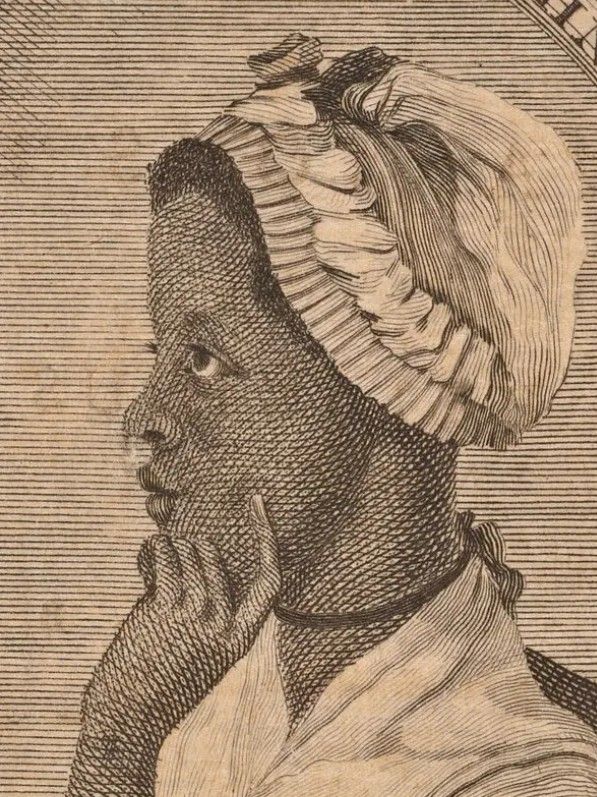
While the name Phyllis Wheatley may not resonate with many in the 21st century, her cultural legacy pervades throughout many literary influences in our time. Phyllis was born in Senegal/ Gambia in the year 1753. Kidnapped at the age of 8 and placed on a slave ship in 1761 she was brought to Boston, Massachusetts and sold as a personal servant to John Wheatley as a personal servant to his wife. It was in this interlude of destitution that Wheatley began her more adamantine aims: that of being renowned as amongst the first female African poets and writers of her generation.
Under the tutelage of the Wheatleys, her studies of both Latin and Greek excelled, thus being notable influences in her works in 19th century America. Her most modest, and early works emulated the influences of both Homer, Virgil, Torrence, and Ovid — providing both the disparity and delineation to her contemporaries: Jupiter Hammon, another founder of African American literature with Christian sentiment, and Phillip Quaque . In his work An Address to Miss Wheatley, Hammond commends Wheatley for her religious beliefs, even though she was taken captive from her homeland — urging her to remain steadfast in her Christian sentiment.
With her two children, Sussanna Wheatley therefore took her under her wing, and educated her accordingly encouraging her to read and write with particular care as to the classics. Thus, acquiring the surname of her master, she continued to write in earnest, propagating an immense body of work in conjunction to poetry and literary extrapolations. At age 13, she wrote her first published poem. In it, she documented a tale of two men who nearly drowned at sea, thus published in the Newport Mercury. Of note to her fame was her only body of prose and verse called Poems on Various Subjects, Religious and Moral which was published by Selina Hastings — the countess of Huntington, a Methodist religious leader in England (Hastings, 1).
With the aid of her contemporaries she became the first African American, and most notably the first African American woman to spearhead such antebellum rhetoric with the intertwined nature of spirituality and religion. As a founder she helped establish the disparity of the African American, the African, and the slave as an unjust affect to her cause – mirroring an unparalleled pathos to the cause of abolition, and Christian Pharisaic hypocrisy in relaying her the very conditional nature of her sentiment.
Taking sides wit George Washington amongst the trials and tribulations of the Revolutionary War, Wheatley may be ascribed as a truthful revelatory patriot, with a strong affectation civil, and moral precedent. She was subsequently invited by Washington himself in 1776 in the year of our Independence Day.
Continuing onward with a spur to her literary aim, Wheatley moved to London, where she met difficulty in her decline of health. Upon realizing such, she moved back to Boston, Massachusetts where she met John Peters, a free African American man. She birthed three children, all of whom died in infancy.
She died in her early 30’s in December 5, 1784, and remains as one of the most notable African female writers of her millenia, founding a sentiment of abolition intertwined with religious freedom that resonates with both writers, and readers of our day. Though procuring no heirs to her literary accolades as the first African American, and female poet of her generation to publish a body of work in American tribunals, her maternal fortitude in her pacifist allocations lives on in the aspirations of many who listened (paving the way for writers such as Octavia E. Butler, and Samuel R. Delaney), anthologized in the public consciousness of African American literature.
*Passage from Jupiter Hammons address:
“I pray the living God may be,
The shepherd of thy soul;
His tender mercies still are free,
His mysteries to unfold.”
Works Cited
Phillis Wheatley. Biography. Online. https://www.poetryfoundation.org/poets/phillis-wheatley. 2019.
Letter from S. Huntingdon [Selina Hastings, Countess Huntingdon] to Susannah Wheatley, 13 May 1773. http://www.masshist.org/database/viewer.php?item_id=794&br=1. 13 May 1773
Phillis Wheatley. https://www.biography.com/writer/phillis-wheatleyJuly 22.2019.
An Address to Miss Wheatley. Online. https://www.poetryfoundation.org/poems/52292/an-address-to-miss-phillis-wheatley. 2019.
 The Nebuchadnezzar magazine
Leave a comment