By E.K. Anderson
Genre: Literary fiction
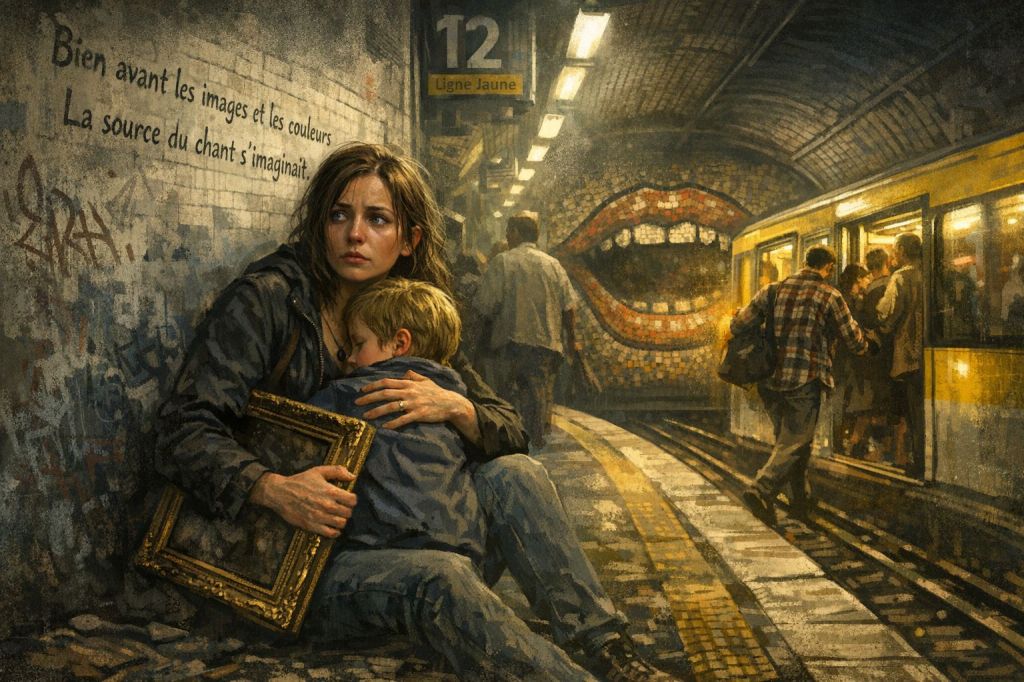
June’s six-year old is prone to temper tantrums. Last week, she took him out of school for a work trip in hopes of abating his outbursts. An excursion he will barely remember, she tells herself that this is a sound parental decision. Like him, she likes to pretend, though she is twenty seven: smack dab in the middle of early adulthood. Her own imagination fascinates her because it is pathological, bordering an artisan’s creation. With deceit its serpentine nature slithers, always. The lie is that she vacations for the sake of her job, and not for the interests of her son.
She is a Program Manager for the Smithsonian Institute of Natural History. With a doctorate from George Washington University, June’s area of focus is in Museum Studies. Her job is to stock and categorize the assortment of artifacts. She guides the curators, historians, and biologists by conducting personal, archaeological research. When objects are transferred between private collections, she is contractually obligated to meet with the board of affiliated sponsors, discussing the artifact and the condition it was kept in. Along with the oversight of annual exhibits, financing, and monetary donations, she lectures to both the public and faculty.
The exhibits are classified by time and region. The displays change often, but the themes remain the same. On the upper level, above the taxidermic elephant, are Kanaga masks from the Dogon people. Upon this same story, arranged in a set of complexes, is the Gem and Mineral exhibit. The Hope Diamond, a prominent jewel renowned for its curse, rests in a glass display. It is a vain thing that rotates on a pedestal, stopping alongside each facade of the case, for passersby to gawk at.
This exhibit exposes less known minerals such as wulfenite, and malachite. June prefers these: the less gaudy rocks, the ones that do not beckon for attention. Her pendant, given to her by her twin Ginelle, is made of onyx. Black with a sheen, the shard barely catches light. Where it does, the rock flashes, angry like lightening.
Ginelle pursues a degree in International Studies, what she describes as a breath of fresh air. She studies at the Sorbonne, and lives in a hostel that overlooks the Seine. She will meet them in Paris.
Thursday of last week, June received a telephone call from a representative attorney. The collector, a Parisian enthusiast of nineteenth century Impressionism, had wished to donate a Mary Cassatt painting to the Institute. At the time of his passing, the will entailed that the lawyer would act as executor, complying with the desire of the deceased. As a result, they fly to Paris, finalizing the ordeal.
Before eloping with land, June observes the first visual awe: countryside. From the air, the hills ungulate as irrigation ditches stretch, like muscle striations: taunt and formidable. The second spectacle, is setting foot off the plane, into Charles De Gaulle airport. Parisian air smells different. It possesses a homestead quality. When viewed from inside the building, the city and countryside are one: a limitless patchwork, meshing into a seamless tapestry.
“Doucement,” the French say. This is a figure of speech for their mannerisms are modest, yet direct. “Let them tread lightly,” they think, “for tomorrow is a sojourn.” This Speech is token, especially in the villas, where the moors know no bounds, and life flows tepidly. It trickles lukewarm amidst the houses of Giverny with buttresses and gables, as it always had in the days of Monet. Then, when one reaches the city, the faucet surges. Paris is unobtrusive in the sense that it does not possess the superstitions of pantomiming peddlers, the outright gruffness of its citizens, or any of the pervasive Western stereotypes. From the sights, to the artwork in museums, the illustrious experience of Paris grows on the viewer. The entirety of the country, is a display. If a tourist is so inclined, he or she might spend a day preoccupied with the Neoclassic architecture. Another, must be spend with the people in the township of Rene, as they are most hospitable. For gourmands, food is the third, as open air markets are plentiful.
*
June and her son meet Ginelle at baggage claim. Ginelle has a stork bite on her forehead that failed to fade during infancy. They would be indistinguishable, were it not for this feature.
“You look older,” Ginelle says. She wears a little black dress, with paisley floral designs and flats.
“By five minutes?”
“Crows Feet never lie.”
At the bistro, Ginelle orders blood putting.
“What’s good?” June asks.
“Everything. Try the duck confit. As for you!” Ginelle gestures towards June’s son. “Crepes.”
“He wants French fries.”
“Not in France he doesn’t. Do you like pancakes?”
He nods.
“Okay then, you’ll like crepes.”
The crepes arrive stacked high. They are thin sheets, draped over each other like lace.
“Where’s the syrup?”
“You don’t eat them like that. Here, let me show you.” Ginelle flags the waiter. “Beurre.”
A minute later, the waiter brings out a crock, with a side of fig preserves. Ginelle smears the crepe with an even layer of butter and mashed fruit. She hands it to June.
“Mmm,” June says, encouraging her son to eat. He tastes it, and grimaces.
For her entree, June orders salmon. They decide, that tomorrow—after the jet lag has diminished—they will tread the cobblestone streets. They will see what there is to see, within the heart of the great city.
But first, they must board the metro. So at noon, they do so.
Traversing the metro in Paris is difficult for two reasons. Aside from being in another language, the platform signs flash green and yellow repeatedly–enough to induce a seizure. Second, unless a foreigner makes the effort to speak their language, the French do not attempt theirs.
The metro lines are myriad, and they interconnect like gossamer threads. Here, is the Green Line that leads to Place de La Concorde. It runs East to West. Another, the Red Line, weaves like an artery, with vessels articulating to Sacré-Cœur Basilica. It leads to the Eighteenth district, an arrondisment where they toil the many steps of Montmartre, the highest point of Paris.
“Let’s go. The Red Line leads there.”
“But I’m not religious,” June says. She does not want to take it.
At its summit the cathedral of Sacré-Cœur is a great, white globe of sanctity where priests implore of their earnings. At the entrance, placards beckon them: some labelled l’argent for contribution, and Prier! for worship.
June appreciates the architecture. The steeple, a construct of marble and gold, is a wondrous thing. Paintings line the basal walls recounting the Nativity. As the Messianic story progresses, so do the relative height of the images. Soon, escalating passed the baptism and miracles is the Crucifixion, at the very apex. The priests do not permit cameras, and the objects of veneration are carved of marble. Brooding silence envelopes the place, to the point of uncomfortableness.
At June’s request, they skip Notre Dame. They reserve the Eiffel Tower for the evening. After the escapade, they venture back to their hotel. Ginelle accompanies them.
“Have you called him yet?”
“Who?”
“The lawyer.”
“Tomorrow.”
June leaves her son with Ginelle for the day. She meets the lawyer, Monsieur Demain in Barreau de Paris, a bureau and law firm. The office stands next to a cheese shop, and the hardy smell of curds is akin to putrefaction. Bland wallpaper lines the interior, with a flag that bears the fleur-de-lis, and a picture of Jacques Chirac.
“It is a lost gem,” the lawyer says. His English is so superb, that June envies it. “Monsieur Hier wanted for it to be in the care of someone he could trust. He had no next of kin, so he donated it. The work is entitled L’Enfance de Venus.”
In truth, she believes this is a hallmark, a missing link of art. The dimensions of the hemp canvas are thirty-two by twenty-six inches. In the center, a school girl stands, clad in the black livery of the day. Swallows and cardinals prance amidst willows and hedges. Fall leaves turn sienna, as beige clouds whisk away. In the background the Seine flows, a stride of blue along the horizon.
June wraps L’Enfance de Venus in a sackcloth linen to protect it from the light. Then, she tells Monsieur Demain goodbye, and the two part ways.
“Adieu,” he says.
*
They spend their last day in Paris, on a boat. The fare is cheap, and the ferry is a giant red vessel. The starboard side reads L’Esprit. L’Esprit traverses the underside of the bridges. Along the trusses, gargoyles leer as the huge mass courses. On deck, a megaphone screeches educational facts such as how Catharine of Aragon wed King Henry VIII, who went mad; at what time Place De La Concorde was built.
At the end of the ride, they disembark. It is noon, again. Their redeye flight to Detroit leaves at five in the afternoon. Ginnelle tells June that she will guide them through the metro until they reach the airport.
*
They get separated from June’s sister, when the doors close. When this happens, June is instantly aware of her helplessness. Like every American tourist, she is lost within the metro conduits. All June has is her arsenal of broken French. She also has several Euros. She keeps these with her credit cards and passport in a money belt under her shirt. June stashes her valuables, in a roll of towels, and buries this within her suitcase. Intuition tells her that if her bag is pilfered, the thief would at least leave the towels which contained her onyx pendant. But above all she keeps the Cassatt painting tucked close under her armpit. When she gets to the airport, she will expedite it as high priority freight. Until then she will carry around the priceless painting, of unknown worth.
Ginelle, whom she exclusively relied upon as translator, taught her several generic words. She knows “Ou?” for “Where?” “Lequel,” for “which one.” “Toilettes,” for bathroom. Once, when a gypsy had fingered her pocket for change, she said chienne, which meant bitch.
As her son clutches the hem of her skirt, she fixates on a map dispensed at one of the kiosks.
“I want to go home,” he says. By home he means their two bedroom apartment in D.C., that overlooks a conservancy.
“Stay close. Hold my hand.”
After missing her primary stop, at Gare St. Saint-Lazare she panicks. She assesses her location, and sits on Platform Eleven in the district of St. Augustine. She sits because she is tired. Amidst the cacophony of the station, her mind forays through an empty state. It petitions her body for a good night’s rest. The knees, which harbor this immense weight, buckle. So she envisions her prospect down to every commodity: finding Ginelle, their first class seats on the plane, the fluffiness of the pillows, the songs they’d listen to through their Bose headsets, the flight attendants as they dimmed the cabin lights.
According to the map they need to board the Yellow Line at Platform Twelve. However, this task proves elusive and arduous. With map and luggage in hand, she struggles through the corridors, clambers up steps, and shuffles through a sea of people. The worst risk, she thinks, is the exposure. June, especially looks lost, like ignorance has affixed to her face.
When she reaches platform twelve, June drops everything. She sets her baggage on a bench, and lets her arms fall to their sides. They ache, and she feels a dull throb in her lower back. Out of stubbornness, she even takes out her pendant and wears it.
June sits in the tunnel for quite some time. She does not know for how long, because she concerns herself with the solitude of the place. In the district of St. Augustine, few tourists congregate. When they do, they do not appear: voices take their presence. The language trails, resonating round and sweet through concrete. It sounds like trickling water, somewhere off deep.
The subway is home to a stagnant art, where graffitists paint lascivious images of engorged genitalia, mocking observers. Tiles tessellate the tunnels on all sides. Quite often, words are written along the walls.
She reads a passage by a poet she does not know. The words are inscribed upon white tiling, and she does not understand their meaning:
“Bien avant les images et les couleurs
La source du chant s’imaginait
A bouche fermée
Comme une chimère captive.”
Further yet, where the the tunnel ends, the words fade like a drawing in perspective. Displayed on the far wall is the mosaic of a mouth, like a fresco. The lips open to a cherry tongue and a dark, cavernous space.
“Can we eat?” her son says, “I’m hungry.”
“In a bit. When we get back to the airport.” She thinks logistically. When they get back to the airport, she will be doing a number of things. First, regardless of the international fee, she will call Ginelle. She will let her know, in the span of a minute, that she loves her. Second, she will call the Institute, and speak of the condition of the painting; that it saw little sunlight and hung on a stucco wall. Third, because she is curious, she will look up the words to that poem, in a French-English dictionary.
The Yellow Line comes along smugly, easily. Indistinguishable from the other Lines it is a gray oblong box. It conduces on the same tracks; it trolleys back and forth, enclosing its hoard of sultry passengers; and it laments in frustration at the things past, and murmurs for those yet to come.
The doors open, like a mouth. Amidst the crowd they are last in queue. Bodies shuffle for a brief moment, a semblance of frotteurism. She clutches the onyx pendant as they enter the confines, the encasement. For a brief second her arm relaxes, and the painting slips. It does not fall to the floor. Rather it is caught by a man, wearing plaid with ruffled hair. Incognito, he slinks off into the crowd, as the doors close.
On the subway she holds her son close, and turns to the people. In their expression, the people know of her foreignness. Their flavor is bittersweet, a taste of umami. For a millisecond, she thinks that maybe, through the disparity of dialect, they might perceive her loss. On the other side of the door, June searches vainly for the man who stole her painting.
The intercom crackles. It announces their next stop. Then, the iron beast jostles.
 The Nebuchadnezzar magazine
Leave a comment