Eric-Anderson Momou was born in the Ivory Coast in Africa. He lives in the Midwest, and is an alumni of UW-Milwaukee with a BA degree in Literature and Cultural Theory. With an Associate’s of Science from Madison College. His short fiction has appeared in Litro Magazine, and the Yahara Journal. Email @ekmomou@gmail.com for inquiries.
I have learned that sometimes the best of things are learned in the most trialsome moments. Difficulty can mould us, and refine us. Aggravation or the taking of offense does not result in mediation, growth, or learning. And instead of project, we must pause, and reflect. Digest.
Being an adult requires you to sometimes discount belief systems that you may have previously held. When you know better, you do better. The latter is not my own words. Look into it.
Words.
Words have power. And so does the absence of them.
Words, exist in texts.
However, it is interesting to me that if a book of text exists, and has existed for some time – there is a reason for it.
If a person goes so far so as to say that a legitimate book of text is meant to stand for an ideal, within said tribe or understanding: one may substantiate as this then, as truth to a people.
However, a belief is ones own, and ones own to carry. It does not mean that all people have to hold it, and it most certainly should not be forced on others.
In regards to the Inner Child, many have spoken on this concept. While we may lack accrimonial knowledge, as to how to grow sometimes we must recognize why we grow.
It is not by force, and it is not by logic itself – but rather what our knowledge base proccludes on over to us.
There is a state of exemplary knowledge that a person may go through and understand, and it is unfortunate that others are brought through this proclivity.
This is not a topic for Old men.
This is for the Middle aged men. Where have we gone to? Where are we going?
Will they continue to deceive? Or will they not?
I have chosen, with my free-will, not to deceive with what I know.
Though I recognize how systems work, almost to the minutae, I care to provide the healing. Or, as one would say metaphorically, apply Gillead balm.
Unfortunately, an individual who has caused the injury, is rarely the one to heal it.
I though, recognize that a person can turn from their way, and at most cauterize the wound.
To recognize that you were the source of injury, is a difficult thing. First, it must be acknowledged, that you were the one in error, and therefore understand that you are not the most ample one to heal it.
You cannot stay in the same place you were, otherwise the injury cannot be healed.
No. You must put yourself in the Third person, preponderantly, Omniscient, to recognize what both the injury is, and how you will heal it.
Acknowledge the facts of your plight Son, then work accordingly with your team to fix it.
In recognizing my inner child, I have come to the conclusion that it is required to come to terms with this fact. Why would I have acted in the way I did? What non-stoic absolutism did anger hold sway with was not recognized or understood within said nervous system? How could a man of knowledge falter from such a cause?
And can he rise despite repute, and public disclaim? What happens when we think of things in the Third person, outside of what others may think, say, or do? And furthermore – how can we educate others outside of that mental coral?
That is the subject of my inner child that I seek to resolve, outside of some Freudian Oedipal complex.
That is the subject of: Honor.
Being a man of honor is the man of the hour. Asiatic countries understand this.
But a person’s character is most noted when they take a stand for the right thing.
Now I hear MLK’s words, “the time is always right to do what is right.” The quicker the better. If you’re on the wrong bus, don’t stay on it. Otherwise you’ll go further in the wrong direction.
That, for all it’s worth is worth noting that my actions have been very child-like. And despite this irony, well I’m willing to admit it.
I moved to the United States when I was a one-year old.
My family came from Ivory Coast, Africa. I was born in Abidjan, from the Chu de Cocody.
My father worked in the lab in the hospital, and my mother – she worked and taught in schools teaching Portuguese, and Spanish.
On the luck of the draw my father hit the lotto. The decision to make it as an immigrant to America was dual fold.
America, under my watch, is the land of opportunity. It is rich in resources, people, hopes, and new ideas.
I see that as golden, and intrinsically so – beyond that I see that golden ebb over the hill.
We settled in Brooklyn, New York – and lived with Thomas, an amazing man of faith Ghana. Thomas, and his wife Janette took us in, and helped us.
As fellow Africans from Ghana, and the Ivory coast, our induction into the Midwest – was first by way of North Dakota.
By that byway, we conduces to the Heartland.
Now there are dairy cows, and roan cows that live here – but most are Dairy.
As an African living in Wisconsin, I have learned many things.
First of all: We are the dairy state, and we love our dairy.
We love our people, until our people dont…
😏.
And lastly cream is good. Ah, yes cream is most definitely good. (So, is Culvers). 😏 💯.
So, much so that I appreciate it.
We’re on food.
The provisions that I see here, are predominant, but I’m keen to see personal e homeopathy, personal care, and creative avenues of electronic farming ‘cropping’ up soon.
For one, despite all else, I embrace challenges here unlike anyone else. And that is why I believe in Wisconsin
The American Consortium against gun violence on account of all Children. A response to the NRA meeting held on November 14-16, 2026. Forwarded by the initiative of Good Shepherd Lutheran church. No Child left behind.
OnMediating Violence with Art
Copyright 2025. The Nebuchadnezzar Publishing House.
The following is an outline of a speech to be delivered at Good Shepherd Lutheran Church, in part of Holy Cow (meals on wheels their initiative to feed the homeless), by Eric-Anderson Momou, an alumnus of Madison College, and UW – Milwaukee. The degree he holds is in English: Literature – Cultural Theory. And an Associates of science from Madison College.
Furthermore, the following is to be presentedextemporaneously on account of the audience if the original speaker is unable to deliver it.
A speech by E.K. Anderson (Eric-Anderson Momou)
Hello everyone,
I come to you today not as a politician, not even as a neighbor, but as a friend.
And I am concerned on your behalf in lieu of the stream of recent events.
I am concerned because of the regrettable deaths of both Irina Zeretska, and Charlie Kirk; that have been the subject of headlines for the past week. Their lives have been amongst the most paramount of circumstances that have occurred in our world today.
(Pause for reflection).
Right now America is in a state of grief. The stages of grief as we understand them are:
One thing, I have learned about the Stages of Grief, with death is that none of these Stages can be skipped. And oftentimes, they overlap into one another. until we accept it.
(To which Kirk’s wife’s X Tweet – “Go to church.”) Really did hit home.
I’m starting to realize that this is the only way for me to heal.
I go to Good Shepherd. It is an LGBTQ safe church. And I, in fact, shed tears upon attending it for the first time.
One thing, I have realized is that it is not about white or black at this moment in time. It about those who believe in Making America Greater than she is, and has been.
We can side with racism: that being the collective opinion that every person of a certain condition, creed, or lineage is bad or we can begin to learn that or which we can do the opposite.
What MLK, talked about with love as the greatest clearance.
Instead of destruction, I ultimately believe in creation. Instead of defenestration, or destruction of public property, I believe in processing anger in a healthy way. Taking anger into account, Now, creation takes a lot to begin.
Sitting down at a table, and taking pen to paper. Taking a paintbrush, and painting on an aisle.
While I live in a predominantly Democratic State, I am aware that I lean idealogically on the right.
To James Telarico, it is in fact about Top and down.
Violence, we have seen, has been a rampant issue. Regardless of what implementation is used, it seems that it crops up at points most inopertune, and most incovalent…
In our world, it appears that living in the United States is difficult to come to terms with what we may feel, and why we may feel a certain way.
Despite these circumstances, what we see is well founded.
We may feel uncomfortable. We may feel an uncanny sense of disregard for the general populace, but the truth of it is that we must remain calm.
Lest we mournst, we must must amongst those who those who mourn.
I must though must not mourn amongst the gnashing and groaning.
It is upon this cliff, or some may say a mountain, that we must submit our greatest of challenges.
We must see the summit, that arid cliff on which mourn and not cast ourselves down from it.
Such an instance may cause one to pause, and reflect. To posit a self-reflect ion unto that which is necessary. And to examine the circumstances unto which is under so as not to go under such diress.
We may mourn upon the circumstances under which fate is dealt, or instances of violence occurring in our world today. It has caused me self introspection.
It has caused me to personally reflect upon the instances of violence that we have been a part of in this nation. The lack of personal culpability, or the admittance of error forthwith and there-in is of personal note to me.
To be self accountable is the substrate of progress. To say you were in the wrong
I do not concur with Fox news presenter Brian Kilmeade, who retorted to kill the homeless, and mentally ill.
I do not agree with popular influencer, Matt Walsh, who says we want their heads on pikes.
These are the current words of socio-political commentators. Words we know have the ability to heal or to harm.
It is on this evening, that in regards to the stream of recent events, and our own self-instilled faith that we have congregated here together today.
It has come to my attention, I, Eric Momou pronounced phonetically (like “air” + “ick”) last name Momou → moh-MOO) (first syllable like “mo” in “moment,” second like “moo” the sound a cow makes). It is ironic that my last name sounds like a cow. And my bank card (show it) has the very markations present of a dairy cow.
Amongst you, at Good Shepherd Church (meals on wheels in Madison, Wisconsin) this simple revelation may not be shocking. It may seem of happenstance that these coincidences have occurred to me.
But I beg to differ.
I, a citizen of the United States, as well as an African, now so dubbed in identity as an African-American man who believes and who lives in Wisconsin is also proactive as to this very notion.
Having noted that metaphor, I also note the state of affairs in which I live in. My significant other, brought me over here from the MeadowBridge library the other day, across the street.
We are not a conventional couple. She is white, and I am black. The dichotomy by which this exists is by no means less than apparent, nor is it a simplistic issue, as I posit in the minds of many.
We know this to be historical, true. She is from the South, and I am from the North.
Anyway.
There was food here, which I should reprimand myself for indulging in, I’m on a diet, and I was struck by the and upon making a public declaration on social media in which I said man must not eat on bread alone, in response to the rising cost of food prices, I was hated by many.
I said this in response to the current economic situation by which our current President has dangled as a carrot upon a stick in the view of many. Lest we agree with his degree of mercy, we shall not have food.
But I beg to differ. There is mercy of another kind.
How many have struggled to get by, and provide food for their children? How many of us have worked tirelessly only to have food prices go up exponentially?
The answer is too many. Too have been slaughtered on account of guns. Now we enter the conversation on a Biblical front.
While this is the truth, I choose to speak out, and while being hated for this truth there is still much to be revealed.
A life is a life. It doesn’t matter if it hails from Eastern European origins, black, or white, or Hispanic, or Israeli or Palestinian.
What I attest to is that _.
In 2024, I was amazed by the response of the California fires by way of the aid that came from prison felons. They assisted in calming the spread of the fires.
Because I was told that I could only speak in one way, or think in one way I was sequestered into a mental coral, a prison by which I knew I was shackled. Upon understanding my bars of incarceration, I sought a freedom of mind from group think, and subsequently to set others free.
I note that we stand on the shoulders of giants.
The voices of men, and the voices of women have been silenced for far too long. That is why I will be working with the Black men Coalition in Dane county, The center for Black Excellence and Culture, Journey Mental health services, the Cultural Network, Immigration, a public defenders, and Law enforcement in mitigating violence.
I will address this issue with poise, with amnesty amongst our borders and Immigration.
Let it be known that this consortium will be working with Domestic Violence shelters, most notably social services as well to end these occurrences.
I posit open discussion on the topic of mental health, a new consortium amongst people of many topics and many walks of life, to come together and evaluate laws in respect to gun and criminality occurring here in the United States.
If we are to Make America great, we cannot abuse civil liberties. No, we must look within at the choices we make, and how they affect others.
And Wisconsin, being the heartland of our nation, we must self-reflect, and pause before anger. Meditate, and look at ourselves in the Third person. No more green to red.
Yield on account of our emotions, and practice peace in what we do.
Such will be a Renaissance.
Therefore, I will be working hand in hand with our artists.
We must create. That is why I will be working with artists, and builders, our construction workers no matter their background in discovering their personal excellence.
Our mayor Satya Road Conway, has posited a difficult job. And though that mantra of convergent authority is difficult, I do suppose we conduce our bus system towards notable businesses for the transportation aorta of Madison to conduce to Chicago intravenously by way of train.
I am for electric vehicles.
No matter what culture we belong to, we recognize this as an international, and intersectional conversation.
EDIT FOR TACT (Remember not everybody believes, as you do Eric): Upon a difficult turning point in my life, where I betrayed those who should been most dear to me, I was at a moral crossroads.
I had an encounter, of some would say the Third kind. This encounter I do not posit as a normal encounter as one would have physically with another human being. And I do recognize, that this experience is not for all.
I remember walking from the library. Oddly enough, I started to hear whispers in my mind. There were many voices by which I could hear. And for a moment I felt as if the artist or writers bought of insanity had ensued.
At the nexus of mental health, I will say that hearing voices is honestly a strange thing. The mental disorder schizophrenia is an example of this.
While I have not been sequestered into the diagnosis of said condition, I do believe that we are beyond due for a discussion of mental health in this country.
Mental health, as a phenomena is in part matriculated in different categories in the DSM 5, a strict medical guideline by which medical professionals use for the diagnostic procedure of their patients.
Psychiatric illnesses, are understood as pathologies. They are diagnosed via symptoms, and with extensive medical training they are understood as diseases.
In the psychological, and psychiatric literature, the medical community surmises that the hearing of auditory hallucinations is indicative of a condition unbeknownst to many who do not have it. Such, is deemed mental illness. More so akin to pathologies such as schizophrenia, bipolar disorder, or borderline.
At the cross-roads of such we wonder where our lies. In the end, we have the freewill to make that decision. But I choose to use mine for the betterment of my community.
There was much destruction during the George Floyd riots, and try as I did to mitigate such violence, the fury was evident.
It was upon visiting the library that I was hit with a splitting headache.
However at this intersection I noticed a plethora of voices, and in such delirium the only sanctuary I sought out, was this very building. These voices were Legion – as one would describe a telephone patch with many voices speaking apart from each other.
I do not wish to get into the details of what I experienced, but I did note the voices were spoken in different languages, different tongues.
Good Shepherd Lutheran Church. For many who have been raised in church, the topic of homosexuality has been deemed an enumeration of Sodomy. They have been relegated as lost as was the account of Lot before destruction came upon them in the very city of Sodom and Gomorrah, by which our current ontology of the word hails.
Oddly enough, I sought solace from these very voices, and the destitution of my state came here.
However, the voice that I heard upon reaching these very church doors was silenced. My hand touched the glass.
And upon walking to the bus stop, there came upon me a voice that silenced all other voices in my head. That voice, as outlandish as it sounds, was the voice of my Saviour.
I have relayed that experience like a VCR in my head for some time. On rewind, it seems incomprehensible, even ridiculous but it stuck. And since that experience the voices have ceased.
I walked to the bus stop in the rain.
I touched the stake of the bus stop to the H and I knew there in the rain. As a black man living in the state of Wisconsin, I knelt at that bus stop. It was an odd experience and felt foolish, but something impelled me.
Being raised a Jehovah’s witness I prayed to the Yahwehnistic God of my upbringing. But as I closed my eyes, I saw two clouds. The greater one, a cumulonimbus spoke with a voice resounding with thunder.
I petitioned for it, as I recognized it, to be the voice of the God of my nascent origins.
That voice said, “Pray to Jesus, if you are to return.” For Jehovah’s Witnesses, or those of any Abrahamic religion praying to a man is seen as blasphemy. How could a man suppose the same authority as one would God?
I struggled with that notion for a bit, and after the voices became more intense, I had no choice but to yield to it. That Law, I felt was engrained in my nervous system, and as a result of my humility I chose to kneel. That humility I call “a glimmer,’ by which my very nerves were healed. I felt sense of recalibration, perhaps more can be researched in regards to this phenomenon in regards the community of neurology.
I remember the vision, from that smaller cloud eminated a voice. Soft and comforting akin to Matthew Brodericks adult Simba.
It calmed the voices, and so I knelt.
In the perifory of my vision, superimposed I saw three signs. One of a pill, another of a cigarette, and another of a condom.
There was a checkmark after each of them.
The voice said, you are to get rid of these three things if you are to talk to Yahweh.
Then I remembered the scripture, Jesus spoke of when he said, no man comes to the Father except through me.
I knew these words to be true.
So then I was led to this church by way of my signifcant other. I a sinner.
When my significant other walked across the street I followed her. The staff offering the tacos were kind. They were Mexican tacos, I remember from Holy Cow were amazing.
We settled on the grass. We had no seats, but we listened to the indie pop band under the tent. Their music reminded me of Iggy Pop.
A lady offered us chairs. Then, despite my discomfort, the sermon began.
A female academic spoke her testament, and the pastor said a prayer.
It was after the prayer, a disabled woman spilled cheese sauce from her feet. I asked Kirstin for a napkin, and wiped the cheese sauce off her feet.
It was then that I learned that I was being called. The signs are something I see in my dreams. I see a celestial chessboard wrought of starry pawns.That is why I write ✍🏾 in the genre that I do. It is in fact vision being made manifest in the genre of Magical Realism akin to Isabel Allende, the writer of “The Alchemist” Paulo Coehlo, and Victor Borge’s “The Aleph.”
(The genre I write in is classified as Magical Realism. The Latin-American authors noted above have been and continue to be my influences. It is how I express myself.)
I now know that my personal ministry has shifted in a different way to help all races of men, all lives, and all people. God is not prejudicial.
This ministry is far more than we would have understood, I believe. Dwight Eisenhower, the 34th American President, whose mother was coincidentally a Jehovah’s Witness, spoke upon these matters – in particular the love of liberty.
Liberty as we understand it is freedom of thought, freedom of mind, and freedom of speech. With the silencing of men who have posited a different notion to group think, it seems as if our Democracy has exacted community justicd
(That in our world today, I am of the opinion that there are some who have relegated cruel, and unusual means of exacting community justice.
This community justice that is decried is a schism away from actual justice. This is why we see so many differing opinions in response to Charlie Kirk’s assassination. In fact from history, I see that those who were in fact assisinated, or attempts were made on their life were in fact the most honest of our number.
-It is not the implementation of execution that kills a man, but rather the intention by which he is killed. The intention can therefore be used as an implement for the intended purpose. It is up to our freewill how that implement, can be used.
What I see amongst social commentators like Matt Walsh and Charlie Kirk, is the undying proclamation that they have used for times immemorial. That it is lawful to kill.
The truth is, that it in fact is.
Under these pretenses:
-A person has threatened your family.
-A person has threatened, or posited injurious harm unto your person.
However, the arbritors of said community justice has been relegated to the personal condemnation of the individual in power. In our day, this may be relegated means the Germanic man, who hailed from the Germanic tribes originating from Rome, by which they have had Celtic and Eastern European origins. These “wayward” tribes, anglicized after their perceived barbarism after the crusades, I posit have had a projection of self unto other tribes (othering). As colonialism continued in the 17th and 18th centuries, so did anglicization.
This othering has been of the kind, by which we in the modern day may describe as racism. A sort of verisimilitude into the public Oversoul conscience that is stipulated on the Truth from the Lie, darkness from glory, light from shadow or black vs. white.
Racism then, is the public opinion of a moral fall by which one member of a tribe dies. This collective consciousness may be falsely attributed to all members of their number.
I have heard of the killing by a member of the LGBTQ+ community upon children in a very church in Minneapolis. I have heard of Irina Zeretska, and the assassination of Charlie Kirk.
However, I do not believe that correlation does not equal causation:
A child may kill another children, but do all children kill?
Furthermore does a child who breaks the rules on a playground, such as throwing gravel at another child, not learn from their error. And even more so, do all children throw rocks? 🤔.
“Let he who does not sin cast the first stone.” A poignant statement.
No. Such that, not all LGBTQ+ kill kids. Also not all Black people kill Ukrainians, or whites. But there are and have been very many whites who have killed blacks, and other minorities.
Therein lies the lie of the substrate by which the enemy uses to condemn us, if we do not choose salvation.
What then do we choose.
The narrative therefore goes, if we as a Democracy have allowed faith in our African Americans, and they have killed a narrative of our democracy does that mean the epigraph of all African Americans? No.
In fact, I do not believe that entire group of people must be villiainized, and brought down on account of a select fee who choose otherwise.
Why then, must they be collectively all be mistreated on account of the action of one man, a tale of which we may know or not know to be true.
We do not hold one children to the same moral arbitration as to all of their number. Or do we? These are questions we must ask ourselves as Americans.
So then, to my point: we are all children on this playground until Recess is over. What happens after Recess is up to us, individually with freewill.
For men such as Matt Walsh to say the following:
“…I can’t even fully articulate it. It’s primal. We want scalps. We want heads on pikes.”
This was why I wrote All, Us Children, because Jesus said, “Unless you become as these, you will never enter the Kingdom of heaven.”
-Words as you well know, Matt Walsh, are incendiary. How little a flame it takes to set a woodland on fire. – I’ll let you figure out what passage of the book that comes from.
His words are holding true unto this very day. The Bible also says in regards to the very Jews who killed him that they do not believe about Jesus, even until this day. Ironically very many Jews do not have a channel to believe in, because of pride, I do believe, and lest they have a mediator by which they have empathized with slavery their Rabbinic belief still exists.
If supposed Christians continue to hate, that therefore continues their version of “racism,” so posited Anti-semitism.
Now then, if that person is no longer your flesh and blood, you no longer have a legal right to kill them or even protect them.
You can extend that, that is true, but what I see in your tribe is a lack of concern for your fellow man. Hopefully your neighbor disagrees.
Oddly enough through my escapades, I believe I have encountered the KKK. Harassed by them in fact.
I took up work at a hardware store. A man without an arm, with a prosthesis, labelled in an American flag met me.
He was looking for galvanized screws, but he didn’t know which size. I asked for what intended purpose? He said: for a motorcycle.
Interesting, I thought.
I also need a black pipe he said.
Black? I thought, that’s interesting. That word, itself is a dillineating trigger, of which I suppose is a demarcation between good and evil.
Okay, I said.
Ya… He said, something for the hose line.
“For the hose line…” I said.
“Ya,” I noted he sounded Southern. His hair was long, like a Hell’s Angel. Graying, and fraying.
Anything can be used as a weapon. A fist, a nail, a ring.
“What size,” I said.
“Three fourths, probably galvanized.” I noted his demure expression, an uncanny grin on his face.
I showed him where to find them, and he said, “Hmmm, not this kind. Nevermind. I’ll be back.”
With that he left the hardware store. He has since come back.
Either way, I figure, I caught him in the act. Gang stalking, while not recognized in the court of law, and is enumerated as a conspiracy theory, has a basis to those who choose to speak upon their experiences.
Either way:
-Cain killed Abel with a stone. It wasn’t a gun, mind you. The intention was to kill, not desecrate, or vilify. The intention was to kill.
The stone, therefore is an interesting symbol. So are pikes and scalping which are known as torture methods. They are another method by which to kill ones enemy.
Stoning still occurs in very many parts of the world. And I do not need to tell you which places by which these may routinely occur. The people that do these things are relegated under a moral code, and a moral hierarchy institutionalized for generations.
A bullet is made of steel, a modern day equivalent to a stone or pebble as would David would have used with Goliath.
To quote Malcolm Gladwell from his book, “David and Goliath,” a projectile is used as a modern day equivalent of a stone, circumvented with modern day propulsion, to reach an intended target at the hands of technology.
Beware of the interplay which technology can be used.
That “target,” if one is skillful, hits center mass – or some in the police profession know as the area in which kills immediately.
Words are incendiary as well. They too can be used as projectiles.
The declarative statements by which many . White men who continue to be for MAGA, on the Right continues to reveal the hatred for all who are not like them.
In the end though, I choose to love.
We cannot bar our hearts or our people from doing what is right.
Acts 2:17
“In the last days,’ God says,
‘I will pour out my Spirit upon all people.
Your sons and daughters will prophesy.
Your young men will see visions,
and your old men will dream dreams.”
Woe to you scribes and Pharisees who bar the way to heaven.
In truth, it was a case of mistaken identity, made manifest with a simple utterance I should have never said.
In my early twenties, I’d taken solace in notable sacred texts, then : certain spellbound volumes, and Vaedic scripts of incantation. Some would say, I was deranged for a time.
Thus, I took solace in these texts, wishing respite from my inner tempest of restlessness and woe.
I’d met the merchant of purple in Ionia. He’d been selling artifacts on a pier, off the stern of his boat.
Despite my marriage, I wondered what worldly spectacles would beset me in the New World.
My answer came at this very bazaar in the town of Kratos, during the Festival of Ides from which the blood moon rose. I neared a tent from which a seller of purple dwelt, and so accosted me in passing. Under the awning of his tent, he introduced me to his volumes of leather bound books; all except one – which he glossed over with senseless muttering. But still my attention was piqued, and I could not forgo the thought of that one black book, with an embossed silver spine: an emblem not unlike the Fleur de Lis.
“How much does this one cost?” I said, wanting to set myself apart as an erudite scholar of literature.
“This one,” muttered the old man, “is not for sale.”
His fingers trembled, and I noted a particular ire – a glint of malice in his eye.
“Come now,” I began annoyed, “For what price?” I carried on, for I was relentless in those days.
The elderly miser took this for a jest, and simply dismissed me with a wave of his hand. The gesture appeared as if shooing away a fly.
“As I said sir, this book – if it can be called such a thing – is not for sale.”
“What do you mean, it cannot be called such?”
“Brigadier, as this text is called is not meant for reading,” said the old man. “It is a grimoire, meant for summoning.”
He shook his head. “I only keep it for protection.”
“Against what?”said I.
“Against the machinations of evil forces,” sputtered the dealer. With that thunder struck from afar; resonating for far longer than any natural timbre, as if the world groaned in distress. The trader noted this and shuttered, a comical action as the — had the appearance of a turkey ruffling its feathers.
“If that is the case,” I said, “So be it.”
I bid the seller of purple a good day of earnings and set off through the festivities of the bazaar. I laughed to myself in the night like a loon, thinking his superstitions incomprehensible.
Now, though I regret such an action; as my laughter was undoubtedly a taunt to Fate.
Of course, though my intent had been clear upon seeing the black book. This otherworldly grimoire had caught my attention to such a degree that I could not forget it.
I sought to, but I grew restless most nights, and could only dream of phantoms thrashing in an abyss, and lightning taming them.
The melancholy I felt bordered a malaise, and for weeks onward I neglected my commodities, allowing my brother Talbot to manage our late father’s estate. I stayed within my study, a small enclave where I could look outside on the street, and observe the commoner’s fanfair.
I ate little in those months, barely peeping out for the exception of my meals – which my beloved wife prepared. Our exchanges were few in that time, and the worry had set in her face like an old mask. I reckon this experience aged her, but she knew I engaged in my life’s work
_
My descent into madness began on the night I stole the book. Had I heeded the miser’s words, such calamity would not have befallen me.
To this day, I imagine my other life had I not found the grimoire.
In my dreams I see the lodging I could have built on the cliffed coast of Kratos. The seminary school.
The arable land in the region of Ionia, traded purple, or ventured to the Silk Road.
I could have been a merchant; the richest of traders.
And on it goes.
But such things I will never know, for they are not the life I lead.
More than ever, I wish to — be safe would not have lost my wife upon the forsaken Isle of Absalomos.
Every part of my being – my fascinations – became so entrenched with its contents that I could neither sleep nor eat. I did not know then, that this obsession was a product of the grimoire itself; namely its preying subterfuge on those who examine it with naivete.
I sought an acquaintance with the unspoken darkness within.
The cipher, a derivative code of Sumerian cross-referenced with Davidic manuscripts took a year’s worth of study. I taught myself Greek, and Latin throughout this period: all to no avail.
But the toil soon paid off, when during one night I deciphered the title of the text.
“The Order of Absalomos,” it read, and I stricken with the year’s worth of grief felt a relief as I have not experienced since.
By night, I encoded the cryptic letters, of g
I learned of The Order of Absalomos, as it was called was in need of an heir. A
Rife with —
Ours is a silent order, shrouded in the lands of the east by way of gloom, and our only trifle is with those waging war. For in Shangri La, there is peace and we have kept it peaceful.
Now, I must tell of my last voyage – the one that brought me, and my kin here to the celestial shores. No tale, or any of its ilk have fallen upon mortal ears. Such is only known by the fowl of heaven.
*
We had come aboard the Leviathan for the sake of necessity. The lore in those days had done much to inspire our wanting for new beginnings from ours, a Begotten World. At the news of my wife’s conception, we boarded the vessel with our few belongings. We took our luggage, I packed my father’s garments; his pocket watch, an heirloom which had passed from my brother Talbot, and a booklet through which I could chronicle our journey. I’d also kept his armlet of which I kept sanctimonious about my arm under my garments.
He’d called it the hex of hexes, a band of protection to arm myself against unseen forces. I’d taken my brother’s words as folly, as he was a superstitious man, but wearing it gave me a strange sense of hope and longing, as if he and I still shared a connection after his passing.
My wife, having no immediate family kept her necklace–of which I offered as a marriage gift–in a lace shroud.
In a rush, we’d purchased a month’s worth of food –or so we deemed a sufficient amount for the seafaring sojourn–from the local market. She purchased a few unleavened loaves of bread, dry fish and fruit.
Once aboard we’d kept to ourselves. I’d done this as a precautionary measure, to hoard our denarii from thieving occupants, and to protect our unborn child.
This measure served us well, and towards the midpoint of our journey, our little sum of riches, 30 silver talents, had been meticulously wagered to an acrimonious degree.
Then, the sound came from out at sea, and the water trifled with it. And all we could see was the froth of the Lady the sea, and her pounding fists resounding upon the starboard side.
The storm was a great storm, and the upset- I suspect- was due to the lore of which we heard from drunken misers: a misappropriation of prayers to the Unknown God. I had taken this
Furthermore the rogue swept on over us and we could not see the day. Nor could we see the luminaries, by who’s light we used for our direction.
The captain had fallen ill from a most unsanctimonious fever: one which took the rest of the ship and his fellow seamen.
From this sickness, I was grateful to be spared, but my wife had taken it, and so I feared for our child.
Despite the malady she kept fast, by what supplication I know not, but after my prayers to the Unknown God, the sea quieted though it did not rest.
On one particular morning my wife, laden with a fever of a most insidious sort, remained in bed. Her hair was matted down in places where her perspiration had flowed. Her skin had reddened with blotches of red, and parlor though the type of sickness was foreign to me.
I feared that it might be leprosy.
Then she spoke, and her voice was weighty like some beast had taken the reign of her throat. It spoke in a cavernous sort of way, as if the voice had come from the ages.
“When I birth the child, you must throw it overboard to the Sea,” she said.
I, thinking it was a condition of her abominable fever, cut her off.
“I will do no such thing,” said I, and at once she fell silent, and I had feared that she had died. But her breath was faint. I heard a slight rasp, her bosom rising and falling. Her head still hot so I thought to sleep beside her bedside until morning.
Though the sea did not let up, and I did not sleep I held fast to my wife. I did not rest, even for a moment by night.
A particular thing happened that night. What though transpired, I am uncertain unto this day.
I’d felt a villainous chill near my bed, and utter silence. Such a silence, I have never sensed nor hope to experience again, but it lingered for so long a time that I’d thought myself a somnambulist.
I smelled a decay, like necrotizing flesh.Then, the figure came from the ship’s corridor, through the oaken wood of our door. It rose to its full height – stressing the floorboards, and entered our room. It’s proternatural, a form of a weakened and fickle man with glassy eyes. His beard swept clear to the floor, and as the apparition so gazed at me, I gazed back.
It sombered nearer, encroaching upon the form of my wife. I tried to yell, but my fear was the great silencer.
He, stooped near the bedside and looked at me through hazy eyes, the eyes of which saw ages pass and go. All-seeing eyes by which no mortal man had ever acquired, except through visions and libations.
I clutched my wife’s hand. The ice I’d felt made me shutter, and I had not known whether to leave her, but the apparition stayed.
He did not speak. Yet, I knew it was he who the shipmates had mentioned. He was the Silent One of ages past, ridden with the fears of men- and he had come to visit me in my mourning.
Passing through me the Silent One reached out a decaying hand, the apparition clutched her hand. Then, he pointed to my wife’s womb.
Her eyes opened wide, but the condition of her eyes was not as of the living. No, this husk – this golem was not my wife.
She spoke in a language I could not discern, muttering loose utterances. She turned her head, at an inhuman rate, and simply gazed at me and smiled: bile forming at her lips.
She spat
I knowing, what she’d meant obstinately declined.
Then after blinking, the apparition was gone and I’d come to know the sound of the sea, and the rush of its torrent as a great comfort.
My wife’s condition worsened throughout the day, and by evening her body was no more than a cold corpse. The condition was of the most insidious sort: rising when the day was overcast, and sleeping when the sun rose.
Even so, I being no coroner, would not leave her side. I could not – for fear of deeming her dead, and later resuscitating.
I locked the door to our quarters, ensuring none of the shipmates, or passengers would see her.
Then in the early evening she breathe her last, and my wife’s soul was no more. I did not know what deity had robbed her of life, or if it was the Silent One.
At her last exhalation, the sea calmed. I searched for a pulse, but felt none.
I decided to stay in our quarters until the night came, and so with arduous effort proceeded to walk outside of our quarters to walk upon the deck of the Leviathan.
I saw no one upon the deck, as I had suspected of seeing no one besides the captain’s designate, and so I continued ruminating at the state of my affairs, with the passing of my wife and our unborn child. I did so for the sake of respite, and self loathing. I sought solitude.
I looked upwards at the moon, at the cloudless night. The moon lacked its luster, and had instead turned a blood red.
At this omen, I walked back to our quarters, but my wife had gone. Instead of her place I noted the silence yet again and the man stooping over her body.
“Get out.”
I spoke with an aggression and fury unlike any I’d ever known. But the figure kept standing and when I approached I saw an ectoplasm streaming from his mouth that flowed into her nostrils.
The figure glanced at me yet again, and vanished.
I looked down at my wife, now miraculously resuscitated.
I felt her head for the fever but it had in fact passed. The ice remained. I noted no natural breath from her nostrils. But she was alive- or appeared to be so and when she rose I yelped with such appreciation.
You didn’t listen, said the golem of my wife. Her eyes held on to mine with such malice that I could not recognize her. Her face looked bleached and worn, her countenance wan, and contorted as if an animals.
She stood with such rapidity, that I had hardly the chance to rise and stop her. As She headed for the door, I attempted to block her, but she shoved me with such remarkable a strength that I’d failed to regain my balance in time.
At this, I became aware that this was not my wife but a fledgling malevolent spirit that had taken control of her.
She sped past the corridor and up the stairs, at such an inhuman speed that I could not keep up with her.
She walked upon the deck, dragged by some unseen force. She looked above at the bloodied moon, and her body rose upon the rail of the ship.
She began an incantantation, at once my feet fused me to the ground.
« Bind him, » she said.
My movements stunted, I could only gaze at her through imploring eyes.
“Merriam,” I implored, “Merriam!”
but she did not heed to my piteous cries.
The flash of the blade shined in the moonlit gloom. She raised it…
And then the sun peaked it’s crest from the edge of horizon, and felt the warmth of the morning sun.
At this, the spell broke and I could move yet again. In my desperation, i sought to catch her from falling into the sea as her body dropped.
My wife looked at me with terror, and I having seen an innocence in her eyes realized her naïveté concerning the matter which befell us.
Again Her color had returned to its noticeable hue. The other occupants aboard the ship crept from out of their resting places – and I expecting a certain supernatural possession amongst their number – took my belabored wife to the quarters.
Then in that hour her birth pangs came, and I had not known what to do. I prayed yet again to the Unknown God, for a swift delivery.
Then our son came, and I’d wrapped him in our curtains and blankets.
My wife held him for but a little, and then I took him. I’d kept him close, lest my wife resumed her uncanny condition.
Whatever condition had befallen her upon the ship called Leviathan, was a nocturnal disease. Secretly I sought out a method of escape for myself and my infant son.
I will take a walk, I told her. So you can sleep. Id tried to reason with her that I would take our son for only a moment, but she declined to consent and so wanting her to retire in peace from her birth I let her have him.
This was a mistake.
I’d begun making arrangements, seeking out some plywood I could strip amidst the rafters so that I might construct a makeshift vessel. I did this inside the prison within a lower hull, where the deconstruction and subsequent desecration of the ship could not be heard.
I took the rivets from the prison bars and hammered them into the oak.
By midday I’d constructed a quarter of the vessel, crude though it was, but that which I deemed buoyant enough to float.
The sun had dipped by the time I’d bound the makeshift vessel with excess rope the sailors housed in the belly.
Rising to the deck I saw the captain and his ship mates, all gazing toward the moon.
The moon had reddened again, and all I could see in their eyes was the glossiness id seen in the eyes of the old apparition with the bejeweled beard of silver.
The captain having readjusted the wheel steered the wheel in some unknown direction with pallid eyes set upon the moon and about it he kept fast
Luna Veni mortem
As a seafaring man, and one who loves the sea I will give this denunciation:
Steer clear from The Isles of the Wanting, where the dead have no mirth.
We’d sailed near and far, and the cave of which I speak was one of trivial legend. I’d overheard a learned man speak of such things on our ship, yet I paid him no heed.
In the evenings my attention was diverted to my companion: my wife, sick with child.
(The escape from the ship)
After rowing the makeshift catamaran for several leagues I neared the vast bowed shoreline – with pockmarked cliffs, and mangrove trees along the inner flank.
Albatross birds dipped and gullied in the gale. Besides them there were no other inhabitants.
Within the cave, I crept down through the outcrop. I walked down through the crevices, into the basin of the lair. Braziers lighted the conduits, a sort of unending vicious flame that glowed white. An altar, I saw before the great abyss and in the vestibule with the arch of a rotunda I saw jewels like diadems – each refracting the light of a myriad of earthen stones.
I felt an uncanny reverence for such a place, as if I’d trodden some barbaric sacred ground as if some tabernacle, or temple.
Etched upon the stone, written like some sort of cuneiform in a language I was unfamiliar with read:
“Escriptan Volan Serpentis Absalomos”
Oddly, I did not struggle over the translation – as this dialect was neither latin nor greek, but a _of the two. From my discerning I believe this was its translation:
Here in lies Absalomos, The Winged Serpent King
And i heard a chant from deep within the recesses of the cave, and a disembodied light arising from deep within the basin. The putrid odor rising like incense to my nostrils, I kept my son close to my bosom.
I stifled his cries, in the linen of my cloak, and carried him away from the grand vestibule. Had I known the condition of my fate, I would have stayed. But the half-men came in droves, and like an encampment they circled us.
Seeking refuge behind a large stone, I saw the lot of my shipmates: entering single-filed like poltergeists from the gloom.
I heard a rumble from deep within the cave, from where I’d fled. The roar – if it can be described as such – was of such low a timbre that I could feel it in my bones.
Despite every inkling within that restrained me from looking back, I did so. I looked back from the abysmal plane from which the sound emanated, and sat affixed behind the crag.
Then the beast rose, a single serpentine neck protruding, and elongating – as if some extinct beast from a time immemorial, and untarnished. I beheld a single gray cyclopean eye, in the center of the feathered god’s forehead, with the same haunting expression I’d seen in the sailor’s eye – the same pallor of the moon.
And as its head grazed the ceiling of the monumental cave, I saw its height and breadth as high as ten fathoms. And the sailors bore it witness, each one with the same gray expression in their faces – and I knew then that this King – This winged serpent god – had heralded them from afar by way of the moon and the Silent One. His vice had tainted them, as a poison. And for what reason?
I looked upon the face of my son, and knew.
My son’s eyes had taken on the same sepia glare of the mauve sea. His cries stifled, his tears sept into rivulets of blood. His head turned in the direction of the grand beast, and I could see that he had been lost to its enchantment.
In fact the beast had summoned my son for sacrifice.
Then, my wife entered the cave, with a veil upon her head like sackcloth. She entered with the Graying Man of ages long ago – hand in hand.
They entered last, as if some funeral procession. And i heard her cry out in the blackened dark, with a cry so shrill the sound pierced it.
Mirat Absalomos, my wife said. Her voice was as many – not as one, but in unison with the rest of the ship mates. Then the ship’s captain genuflected before her, and offered him his sword.
This she took with such strength, and superhuman rapidity that i shuttered. She took the blade, and released it from its scabbard raising it to the glint of the moon for all to see. The captain, bowing his head, accepted his fate. Then, she administered her deathstroke – a single hack to the dear captain’s neck – and he was no more.
I heard the captain’s head roll down upon the steps of the cave.
His head rolled down the floor of the cave, until it stopped – quite abruptly upon the crag of our hiding place. It was then, that I looked upon the face of the captain. His mouth opened as if to make some utterance, but silence only ensued. His eyes, open and gazing, shifted to me and my son.
With his infant hand, my son reached out to touch the dreaded decapitated head. His might was such that I could not restrain him. He plucked a finger in the mouth of the captain, where the blood fell, and resolutely – as if to spite me – tasted of it.
It was then that I knew that my son’s fate had been sealed to this dreaded Absamolos, this Winged Serpent God, whose hand delved cistern of ages – who could stir the murk and froth of time to his bidding.
What power the being possessed I could not absolve, but perhaps by some ill will bestowed by that of a greater god could i save my son, despite my greatest reckonings.
I uttered a swift prayer – one of desperation and partial lamentation to this unknown God of ages; that this winged serpent King Absalomos would spare my son for me, and that I might take his place.
With all my might I took him away from the lure of the disembodied head. Struggling against my greater judgment, I grasped the head from its greying, and thinning hairs and took it.
MEanwhile the sound of Absalomos was one of distress. He had been robbed of his bounty, his subsequent worship, and so needed to feed upon the shipwrecked crew. Had I denied him the head, the slaughter of the captain so too would too would I have denied him his corporal meal of ages. I knew, then, that the god would dispute his birthright with blood.
She peeled back her lips like some rabid animal, with teeth like thorns.
She lashed at me with such might that I could not
But we could not leave the island until morning, until that forsaken moon had left us.
And so I took the head and tossed it back into the sea, the captain’s last bidding were he to die at sea.
And my wife came at me from the crags and she lashed like a phantom, with tooth and nail – but still I would not offer up our son. And the crew followed her.
And with the sword she’d impaled me with, and struck her arm. Despite the affliction, she did not slow. In fact, this action did more to inspire her fury than all else.
Then she fell over the precipice to the jagged stones below.
But even despite this fall she did not falter, for with the remaining limbs that hadn’t broken she climbed with such furocity.
And when she rose above the outcrop i took the sword and blinded both her eyes in which case, the spell of whatever ilk was broken and the ships men – having been monstrous- were now tamed.
My wife screamed with such a cry that I could hear the groan from deep within the earth. And I knew that such pain as id inflicted upon my dear wife, had been the same pain of Absalomos, ever blinding his sight.
With sword in hand, I sought to take her out of her misery, but by absistence of conscience could not, for or her blind plight was already a destitution – and despite her relative animosity, I could not give her the deathstroke.
We left the island, my son and I watching from afar as my construct bobbed in the gales of the sea. I saw the herald of Absalamos watching from the hollow of the cave, his eyes set – affixed upon some celestial tapestry. He gazed onward, and in some manner I beheld that he was in search of the Lost Heir of Absolomos, the Prince of the moon.
I heard the wailing of my wife from off the distant shore. She was a banshee crying for her lost child upon the Isle of Absalomos.
And I turned my gaze toward the sea, where the light of the sea dwindled upon the horizon, away from the Isle.
The titular show, cast with LeVar Burton, as the main lead, speaks volumes about enslavement in America.
The show, presents the story of Kunta Kinte, an African man who hails from “The Gambia.”
The account of the story is of a man who, raised on a plantation, exemplifies an experiential knowledge of his people, and subsequently those who trade him in amongst his people.
The coalition, as is described in the work, recounts his journey from enslavement to a reclamation to Personal freedom, despite the allegiance of his captors.
For Kinte, it took a crossing over the Threshold.
Nathaniel Hawthorne put it most amply in his work: “The Scarlet Letter” when he wrote, “No man, for any considerable period, can wear one face to himself and another to the multitude, without finally getting bewildered as to which may be the true.”
In Hawthorne’s work we are introduced to Pearl, the daughter of Hester, a woman akin to Offred in Margaret Atwood’s “The Handmaid’s Tale.” As a child, she speaks to her mother, mirroring not the nature of her transgression in question esoterically, but through her own expressive, and often child-like interpretation.
Pearl, speaks of the disparity between her family and society in Hawthorne’s work…like a duality of consciousness posited by W.E.B. Dubois, relegated as “Double Consciousness.”
Interestingly, enough I’ve had a pearly disposition as of late. It is Interesting that the main protagonist of Hawthorne’s work represents the state of our affairs.
Our modern world encapsulates a pronounced social order. A dichotomy by which we must elope and be present in the world.
Patriarchal in its understanding, we understand this. That we hold our Men to a standard. This standard is a bond of which we understand as the highest understanding of our Order.
Donald Trump is quite the loon. He is a Peter Pettigrew.
In so doing, we must respect Our Women. Our Minerva Mcgonnal. Yes, these Women we must respectfully understand.
Harry became a Wizard, from a Muggle.
He changed Tribes.
Now the question is, what happens when we change tribes?
We all know what happens.
A shift of allegiance, I posit, from the framework of the Other – gives schism to the moral fabric.
For one the feeling is well is founded. It is a survival instinct. From an anthropological perspective tribes have served a purpose. They have defined our existence, and they have represented what we have all stood for communally.
There is a man that rises to the top, and because of his uniqueness and ability for conflict resolution, he is crowned.
I do not see that with the MAGA community.
As despots, thrown about by the winds and current of change, a sole pariah finds himself drawn in via a tributary of their own insight. Then when the vein is picked, the main River draws blood.
Be very careful MAGA community.
A rivulet trickles into a stream.
And for that, you have been warned.
Narcissism at it heart is due to a deep-seeded insecurity. The fear of being ridiculed – the fear of feeling lesser: of ostracization; of being tarred and feathered as a social pariah.
One thing notable with these types, which I see even in myself, is pride. It is the temptation to put on a display of air. A puff of the chest.
Or, we may say an over-compensation for what is lacking.
This is what we deem, Hypermasculinity.
Hypermasculinity, is the weak man’s imitation of strength, for a man of integrity and honor does not need to impose his character with machismo. He does not need to put on airs.
In the words of Tyrion, from Game of Thrones, “Any man who says ‘I am the king,’ is not truly the King.”
An honest man does not need the World to heed him. He heeds his word.
Such a man merely exemplifies it in his actions and what he says. There is no front.
It has taken me much introspection to discover this. It has required me to take a good hard look in the mirror as to what I am and what I could be.
To my point, The MAGA movement has gotten strong traction with both Latin-American and black men. Along with the men’s self improvement movement, podcasts, and novel platforms of communication, MAGA are soon becoming the biggest node for information outsourcing throughout the world.
However, a fixation as to these things is not what is important. There is a problem, affixed on the recognition of the self. The truth is, it is not the idolization of an ideal that Men should uphold.
In fact, it is truth. It is: honor. This is Bushido. This is the way of the Samarai. (Ok, use the force young grasshopper).
I admit that in my past I have not been honest. I have not been truthful. And by irony, that concept is self-reflexive.
But I choose to reclaim my own narrative, and that is what I choose to be. A new person.
The MAGA movement, while a recalibration and revival of traditional ideals, fails tremendously in its supposed mission. As an individual present amongst their number, the rage is palpable. Tantalizingly perceived in the nervous system.
The excitement, while invigorated and relatable is akin to the rousing of the anti-human and separatist movements.
But it is a tribe. And for that reason only adherents feel a sense of belonging.
Anyone can tell you a myriad of reasons why communal rousing is unifying.
MAGA for what it’s worth has the traction for a reactivation of a subconsious belief system upon which this country was founded. It blares to those hearing a Call for a return to center.
For a return to our roots
If we want to fix America, we have to return to our roots. We must listen to our fathers and mothers: to heal our Boys to Men.
-And surprisingly this takes humility, the antithesis to Pride, and ego.
This requires an acknowledgement of several things.
First, is knowing that as human beings, as we are, we need to reconcile with our place in the stream of time.
It’s 2025. We live in a Capitalist economy with socialism as the penumbrella. As idealistic as we want to be, America is a business. It has ticked, and tocked as the greatest machine of our time.
But the beauty of the machine is its internal structure. As a world engine this machine is composed of individual parts, that MUST work in tandem for calibration.
Oil is needed for the Grind ahead. What is deemed as “oil” we may see.
To quote the philosopher Auguste Comte there are three stages to current Collective Consciousness, described as Positivism by which society comes to a relevatory understanding. This, is “the theological stage, where we derive comprehension from supernatural or religious beliefs; the metaphysical stage, wherein these explanations are formed by abstract or metaphysical notions and philosophical principles; and the positive stage, where knowledge is derived from empirical or quantitative observation and the scientific method.”
Now, at this nexus, I believe we are in what Comte calls the First and Second stages respectively. Betwixt and between the physicalism, and the esteemed spiritualist perspective.
One thing I believe is that while we are in the process of understanding one would do well to understand the importance of grassroots in the economic framework.
EDM, a genre of music by which we may hear an ephemeral spirit, is one of the most interlinear waves to have hit the music scene.
In 2023, I went to the Great Beyond, a small EDM festival in Michigan. I was novel to the music genre, but after hearing Avicci – I was in.
I met people from all over. Amidst the smoke, and the lights and the pizzaz I was drawn to one union unifying point.
Community. It’s in our soul.
Music, I believe, is an atavism. A sound wave that resonates through time – across cultures,and across time streams. It draws and unites people.
A guy from Africa, or the Maldives can be awe-struck.
This encapsulation of music is feast, pregnated on the supposition of Capitol.
I have seen selling music, in our day and Age, requires two things.
It requires providing 1.) a product valuable enough of mass consumption, and 2.) petitioning to an establishment, or “Order” as the main vehicle for distribution.
We have to foster and help one another in selling our product, namely the ideal of prosperity for anyone. Relegating personhood, and communal concern – not for a select few, but a freedom for everyone.
And when I mean anyone, I mean anyone.
Thus, we must use our Market value, acknowledge it in terms of value from those who capitalize on it. It is a destiny to Petition to the principle matures of our society, in a way in which will benefit not only their own self interests, but also that of our own ratio, wise on a global scale.
(If the Oligarchs, do not comply with this we send out Luigi and his league on their ass. Just kidding. I didn’t get you before Luigi, but I get you now.
(I get you now man. That’s a very antiquated way of exacting community justice. But I hear you.
-I’m sure Will Smith would like to have a Word.)
But it’s important to Market yourself for the benefit of your growth. It’s important to take an active stand for your growth, and do so in such a way that protects your peace while helping others.
Set boundaries for yourself and stick to them. And above else give yourself grace for the times you’ve erred against yourself.
We are living in an age where we have the choice to Transcend. It is important for us to choose wisely.
To resume Comte, the current Republican ideal of making America greater, from the MAGA crowd is a rage.
They too, are a mob. Those who aren’t a part of this appeal recognize that beyond the group think and the brainwashing is the notion to recalibrate. A recalibration or as I believe an opportunity to return to center. To return to ourselves.
I posit an emphasis on the family unit. Without it, we erode as a nation and as a society.
When White America catches a cold, Black America catches pneumonia.
Enter COVID.
We might have to queue the Band, as it marches on.
We must think about these things, when speaking to our neighbor.
(Thank you, Mr. Rogers!)
Well it’s the same as that from both the micro and the macro. Rich and poor. There’s been a shift, a shifting allegiances, and those willing to help out for the prosperity of their greater man will be the new Parties.
Codename: genius.
(Kanye, you’re funny. Just get better, k?)
For this change to take place, We’re going to need psychologists, we’re going to need doctors, lawyers, and businessmen.
We’re going to need engineers. We’re Going to have to build back better, and I think if we are to petition to the misguided zeal of certain de facto groups within it would require a more macroscopic view of public health, subsequently classifying politicians in a subset of personality traits so the public can better handle them…
But most importantly, we need Artists. The ones that help inspire us, the ones that endure, and give us clarity when we can’t find any ourselves.
Likewise, at the head of every business is a visionary. Often, these types work in tandem with a pragmatist. Examples include Steve Jobs, and Wosniak for Apple;Leonardo Di Vinci, and his craft artisans, Osho and the Rajshnishees.
Essentially what we are seeing in America today is a pragmatist (of which many say is misguided), Trump with “Make America Great Again,” and an unspoken collectivist ideal (which some may say is outdated.)
There are Revivalists, as well who I anticipate will crop up soon.
And there are Opportunists (Musk), who intend to profit from a recognition of supposed demand.
The end result is that everyone wants a piece of the pie, and yet actual skillets are lacking especially in STEM.
The age old method of decrying unfairness from the streets and the rooftops can be regarded as both fanfare and antiquated. While truth cannot be discarded from the vantage point of its unyielding effectiveness, it takes on veritable forms. And these, including free speech, have all been snuffed out.
Now then, we must posit action, and follow through. One must apply a modicum of knowledge and execute that in the real world in a pragmatic way. And more than ever one must be discerning.
Free speech has been snuffed out in favor of a cultist leader. The veritable impact of working in an economy down to the blue collar worker has been one relative to anyone who has done a labor intensive job.
It is based on rewards.
You get a lunch break, after investing labor, you get a pension for devotion or loyalty. You get aRaise for consistency, and furthermore a bonus as praise.
When we talk of Pavlov’s dogs, we learn that a bell is enough to incite the salivary glands, to expect food. Even if the stimuli for food is not present.
But, even more importantly now, is the importance of learning self-discipline. Of not ignoring the beckoning, but heading it.
Veritas Invicta.
So then…
What I posit is if a felon can become President, why not a felon – provided they are seeking to make their lives “Great Again,” should be able to become a nurse. With this, if than atTempt, They should be able to even become a doctor.
What applies to the King applies to the Pauper. Contrary to Nixon’s proposition, “if the President does it, it is a crime.”
Because if the Republican party posits itself as the party of Lincoln. If it position itself, as the unyielding sanctitude to their Judeo-Cheistian belief system, then they must acknowledge that their allegiance to power, and money supercedes their belief system.
And it is that hypocrisy, to blinds them to the suffering of others. And yet the veil cNnot be pulled if one is unwilling to do the work.
Unless there is a grassroots campaign to remind America who she is, she cannot flourish. It starts with the visionaries, not the ones with an agenda.
It is an amalgation of all we have known, and humility to say otherwise. In fact, we are currently in the Prodigal son parable of our nation’s narrative, healing and making it apparent to the rest of the world.
We have to succeed in this quest.
As an adolescent world power we must understand our mass psychology is only as great as the youngest, and we cannot move ahead without the other. If we are to believe that America is great, we are to believe that we are in a Developing Adulthood phase. Comparable to the rest of the world, we are youthful.
Yet it is our unyielding determination in the prosperity of others that continues to inspire and incite everyone from around the world.
At the helm of these conversations are supposed media conversationalists, controversial YouTubers such as Amala Ekpunobi, and revivalists such as humorists and comedians, who have gone so far as to say, what we cannot say, in what cannot be said.
People help the people. Birdy said it best. But above all, help yourself. Give yourself grace, space and needed time internally to do the work to heal, to do the work to acknowledge truths you did not want to accept or could not until they were made evident.
And above all grow.
I speak to you now from what I see.
-As always, remaining politically neutral.
Book pending
-“If you can’t fly then run, if you can’t run then walk, if you can’t walk then crawl, but whatever you do, you have to keep moving forward.” -Martin Luther King.
And no I haven’t lost sight of the Dream.
Copyright 2025. Kumquat Inc.
Eric-Anderson Momou, has been published in Litro Magazine and elsewhere.
-Editor of the Nebechadnezzar, a non-fiction journal discussing topics of mental health, fanfare, and diplomatic hypergamy.
“I think that I shall never return,” said the Dog to his mate.
“It’s just that the world is big–quite big in fact, and we need space, you and I. He was sure he sounded insensitive, anthropomorphic as humans were, en route to a bad break-up.
By the look in his mate’s eye, the Dog knew, she had taken it personal, as the forest adage went, “with more than a morsel of meat.”
At dawn, after a sultry walk through the pine, his ambition bordered piety. He felt aloof, with a demeanor strangely meticulous. Ivan was the scheming sort, as he’d planned this for a long time unbeknownst to his significant other. He did this sparingly, for a peace of mind–in which case his mate would look at him with subjugation.
The forest was not his own. It had felt like it, though for the past decade or so.
He was a runaway from a puppy mill.The manager, an egregious punk no older than twenty, beat the dogs. He named them after numbers, and confined them to staunch, wooden crates in which the Dog, and his companions remained. On those nights, when each dog was confined to his respective crateThe stink of urine and shit agitated his nostrils. The collar was a blade that cut deep into the flesh of his neck. It winced at his larynx so that he breathed in calculated breaths. This did not dissuade him from contributing within the cacophony,
They howled ceaselessly-all of them–long into the night, an unabated, disjointed unison. Soon, the sounds dissipated, one after the next like a sedated mob.
When The manager arrived in the morning. He let the dogs out, one by one.
Three, four…sixty nine!
6 was an old mastiff. He clouted this one in the ear.
Seven! He kicked a cowering terrier.
When the kennel owner got to his crate Ivan peeled his lips, baring white teeth.
Then the punk went down. The dog saw only red.
Afterward, Ivan looked at his handiwork. He’d mauled the manager. warm blood eeked down his throat. He licked away strips of flesh from his chops. The punk’s face-or the remainder thereof hung like a flap adhered by several sinews.
By that point, the ferocity left him. He’d wagged his tail, at the appraisal of his comrades, then proceeded to free them. He gnawed at the twine rope that adhered the enclosures shut. Then, the others: young and lame did the same, and followed him.
The following day, after eating the dwindling, stale rations, they ran. It was a slow, tentative trot at first, each unsure of the other through the forest Then, together their confidence grew and the moderate gait gave way to immersive exertion. Running now, the pack yipped into the winter sky, throwing clods of dirt behind them. Dust leapt, sullying air.
With satisfaction He led them. Brazen They wandered to the city.
They stayed there for a time, upon a city upon a hill, the locals called Coney Island. By day the dogs laid on the beach, and bathed on the ocean’s waters. By night they ate the remnant hotdogs, and snowcones, and hamburger meat left by locals.
They would chase one another between the island’s rusted carnival rides, the sort of of archaic fossils meant for children.
But one day a group of men got him, and the rest of the dogs scattered.
He was brought in a crate to a place the men called a Society. There, there were other dogs, other strays: of all sizes.
An older black man had walked in. He was graying, with a shadow of beard beneath his chin. He had sought him out as a widower, after his wife had passed, and had sought out a companion.
When the Dog was purchased, the Man removed the soot, and fleas. They cured his mange with balm. The removed the embedded collar. Without the collar, the dog breathed comfortably, and the maggots were gone. The old man had named him, Max.
Such craziness, the dog thought. To be referred to by a name.
After the man died, the dog had raised a litter of pups here, underneath the oak. Adjacent to the forest was a factory. And it spewed plumes, night and day.
His pups were not aware of this: they basked in the naivety of infancy, and when their mother was gone away., to be left in his fair keeping, he’d take them next to the brook. There, they’d drink and several would swim, underneath the umbra of tree. He remembered that season, the smell of it. In those days, they could do that. Unbounded.
It started with the rain. It fell as it normally did as a smooth verga running sideways over the fauna. Then the day came when the shrubs shriveled and the oak fell encumbered by it’s own weight. The first of the pups died, at the onset of it. Several more bore rashes, and come late summer–those days before Falls earlyevenings, and the briskness–the whole litter had died.
On one of his strolls, he’d encountered a man. He’d been fishing alongside a precipice.
Despite his prowess, the man had seen him before he’d anticipated, but he did not react. No, this man was different–accustomed to dogs but he did not venture farther. The dog thought of his comrades, the ones who had fallen to the Takers: their outcome he knew not.
So he kept his distance, despite his hunger.
It was several days before he saw the old man and his bucket of fish. This time he crept further. He made a point–this time– of masking his presence, behind a pine tree.
I still see you, Little one, said the man. His back was still turned, casting. Then he turned and smiled.
It wasn’t the sort of smile that the Punk had given him, beset with an insidious intent. No malice was present. His face, regardless of the years was set with fixation, but his eyes were like his own. An old man with dogs eyes.
The old man did not beckon him. He didn’t even coax him, but the dog came of his own accord.
It was just the two of them: the dog and his mate. The dogs mate, a runaway huskie from Idaho, who had joined him in the initial run from the mill.
But without a litter and subsequent prospects on the forest he had nothing.
He’d considered running away with her.
*
Ivan, had gone looking for the Man. The one who had been loyal to him, and he had been loyal to. He trotted alongside a narrow road, a place of his passing beneath a bridge. There was nothing but the howl of wind in that place, and Ivan, despite his fur grew cold.
There was a scent in the air, a miasma, by which he could detect a rank odor. The atmosphere was grim, and the hair on Ivan’s neck raised to the brisk like burs.
Where was the Man? He wondered.
Where had the People taken him. Ivan shuttered to think. He shook the thick mane upon his body.
This was when things went Southward.
He walked closer to the arch. There a figure hung by a noose and rope in the wind, swaying. The interlopers had all but left.
He saw the Manager, a foolish sort – his face still puffed and swollen from the bite he’d rendered. The flap of skin which Ivan had bitten fell looked thick and inflated – his head like a balloon.
The Manager was stoking a fire beneath the Man. The Man who hung as a drapery. The Man who swayed in the wind.
Then, the Manager laughed at his compadres. Some in trucks, most with strange ink upon their arms, necks, and heads.
The Manager took a rubber tire from the scrap pile, and placed it on the fire. The log he took next. The fire grew. So hot and so fierce.
Ivan looked upon the Mob. Most were laughing, but the Manager remained silent.
“This is the kind of thing, you live for,” said the Manager. His eyes brighted more fierce than the fire. They fire, Ivan supposed, rose to his contentment, as the flames licked at the Man’s bare toes, and then his feet, and then his denim pants.
The conflagration began almost as suddenly as its initial spark. The end within the conception.
Ivan growled. The men, four in all, were mighty. Not the sort that appeared frail or decrepit. Their burly nature did nothing to insight fear in him however.
There was a resolution, that he could smell in the air. A resolution in his panting, and in his tense muscles — the striations of which shown through his fur.
This then, is the end, thought Ivan to himself. This, is the end of Age, the end of a glory he could not see — but whatever it was he needed to do — he knew his next step was indeed right.
The Dog within barked, not a harrowing whimper but an ancestral, and atavistic bay of a wolf. That was the battle cry. Then, came the charge.
The Dog could only see within a narrow scope of his vision. He could see a flash here and there. An ember, a limb torn asunder, and perhaps entrails but that was all he saw.
He felt the slick taste of iron conduce down his throat, a solvent by which he could only imagine as a tangible retribution.
He could see the last of the men flaying about, some shouting as their necks gurgled with blood. Others face down upon the gravel beneath the bridge.
Then, he heard the sound of many wolves. All of which baying, and howling, and snarling.
The Wolves came then. Some arrived from the outskirts of the forest. Others came from the hills.
The pack was numerous.
“Eat,” Ivan, the Dog said.
And they did.
*
By the end of it, all that was left was for the fowl to eat — the carrion picking at the eyes of the People. Then, there was a sort of personhood, by which Ivan noticed in the Man. Though, he had long expired at the gallows, he could see a soft wan smile — the sort by which The Man had given him the first time he had washed him free of fleas, and cured his mange.
It was a gentle approval.
The dogs slept at the edge of the forest. They slept, bellies full of meat. Ivan, who had not partaken of the feast kept watch for any more of the People. He exited the forest clearing as a sentinel, but all he could see was a grayness of clouds, and the stillness of their vehicles.
He trotted to the forest clearing, and heard a noise.
This was of a she-wolf. He trotted most cautiously, on over to her. Making his way away from her secret enclave, as she whimpered.
She was birthing a wolf pup, and the she-wolf, borne of silver and white fur sighed in the last grief of her burden.
Ivan waited. He did not know what to do. Whether to console, and nurture — or to depart.
He settled on staying there for a time, and keeping his stead. He kept himself, in a sullen place of mind – between the rivalry of his own curiosity, and the urge to walk away.
The she-wolf, he observed, was quite beautiful. Her fur shone in the pale moonlight, and struck the glimmer of starlight unto him.
The she-wolf picked up his scent. She snarled. The pup wined.
Who goes there?
The proclamation was fierce. It was guttural, and it was loud.
It is I, said Ivan– unveiling himself from the thick penumbra, that shadow by which the moon did not touch. It is I, the Dog that found you.
The she-wolf’s snout twitched. Her snarl went down, and her stretched lips returned from back over her teeth.
That is enough. She said.
Have you been watching me? She said.
Yes, said Ivan. I have.
There was a brief pause between the two, as if they had picked up the same scent in the wind.
The pup, now rolling in the leaves, and grass, and brambles uttered a whine. A sheer cry, and whimper that both drew their attention.
Look, now, this is my son.
Ivan looked upon the pup. He looked upon the frail whimpering form, with large paws, and smiled. He wagged his tail.
The silver sheen of his mother, had shown and reflected upon the She-wolf herself. Like twins, this looked akin to another – all for the exception of a stripe upon the pup’s back.
He resembles you, said Ivan.
The she-wolf grinned.
Very much so. She paused.
He bares the mark of his father.
*
The Dog, and the She-wolf became one. As mates they would frolick in the woods. They would banter amidst the meadows, and run betwitxt the trees. And the pup would accompany them.
It started in the Valley.
He saw the People. Several now, stoking fires — the like of which were great. There were many fires on the outskirts of the forest, and vehicles — larger than he’d ever seen.
He heard a snap from down in the valley. A tree was being cut down. He saw thick canopy plummet down, as the lumber jacks haggled it with their truck.
The fire frolicked, and collected at the outskirts. It started off small, but the scent of the smoke in the forest was great.
Death, he had seen this before. Ivan then turned to his mate.
It is time. The She-wolf consoled her cub. Ivan bayed long and loud for the rest of the Pack to draw near.
I think, that I shall never return said Ivan to the lot of them.
I think that I shall return back where the People are, and protect this forest from here on forth.
Yes, Ivan nodded. That is what I shall do.
Then, the rest of the Pack whined and bayed. Some whimpered in lamentation.
Who will lead us? Said one to another.
She will, said Ivan. Pointing his nose in the direction of the She-wolf. She will lead you.
The Dog’s mate smiled. She gazed upon him in a way, and manner that he could have imagined her to be. Goodbye, he said. Just then, he found a better scent — this one of a man.
Venture further into the forest. Ivan told the rest. Venture where the People cannot find you.
That is the way by which he ushered them away.
He stood on the cliff crag. The place where the forest trees stopped growing — a lookout point from where he could see all else at the bottom.
The fire was getting fierce now, and the People — Men in red uniforms could not contain it. There was much noise from down there, guffawing, and yelling.
Ivan continued downwards from off the perch. If he was to stop anything at this point, it was by meeting another Man.
He treaded cautiously throughout the bramble — waiting as he always had until he caught the scent of a man, near the fire.
Just then, he caught sight of one. A short, bearded man with a fire hose abating the fire. The man was different from the other People who had killed the Man — his owner. They numbered 6.
They had huddled in a cove. A small, ambient place – dark and murky, with a faint smell of musk
The men who huddled there smelled of smoke and soot, and aggravation.
There was a ruddy disposition in the air, of cortisol and stress, and the Dog carried on most precariously.
“That is the way of the things; the matter of things. And in doing so, we carry on.”
“Despite?” Said the younger man.
There was a pause from the older man.
“Yes, even despite.”
“What of the lumberjacks, and the Machine men?” Said the small bearded man.
“What of them?”
The Men grew silent.
He, the man at the helm, took a drink from his flask, and looked outward.
He looked forward past the line of trees, past the horizon to a place that only he could see.
He saw Ivan. And Ivan saw him.
“There is little that we can do about the men who destroy.”
“Let them go, ” said the smaller, wan man. He smoked a cigarette. And took a long hard draft from his cigar, with eyes upon the bearded man.
“This is what we do,” said the man at the helm.
“We wait until the Machine men settle for camp.”
Another long draw.
“And then we take their guns, their hacksaws, and their artillery.”
*
The firefighters waited until dusk. Then they saw the campfires and the fire machines of the Machine men, and the blistering fires that came from their machinations.
Ivan kept his post. He could smell the smoke in the air, and taste gasoline in the air.
He heard the clunking of men automatons. He heard their clicks and their gears, and their motors, marching through the forest.
“There are those who embody life, but they are not of life,” said the man at the helm.
I’ll stay out here, until the Dog comes back.
That infamous nature, that quintessential place in between.
Do not worry men. The day will come again.
The hibiscus tree grew, a perennial from where Chloe was buried.


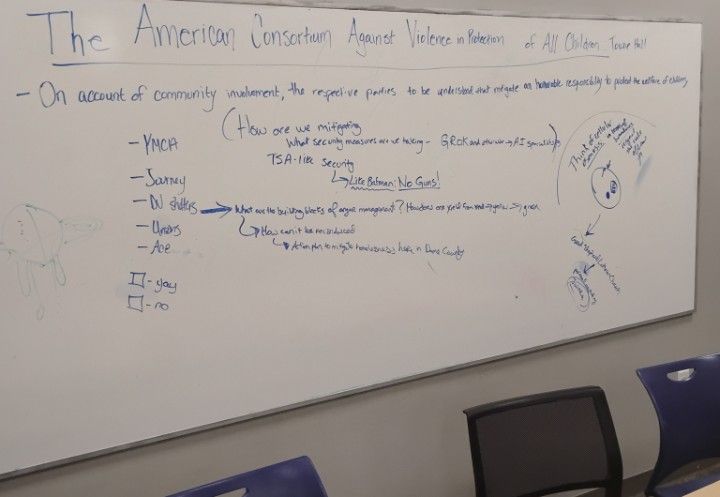

 The Nebuchadnezzar magazine