Eric-Anderson Momou was born in the Ivory Coast in Africa. He lives in the Midwest, and is an alumni of UW-Milwaukee with a BA degree in Literature and Cultural Theory. With an Associate’s of Science from Madison College. His short fiction has appeared in Litro Magazine, and the Yahara Journal. Email @ekmomou@gmail.com for inquiries.
The man dreams of flying in a cloud-ridden heaven, where the sky bleeds sienna and blonde. He is safe here, in this vision, amidst the dawn firmament. The vapors cannot reach him.
When he wakes he is in his bed in a hospital room. He is roused awake by his nurse, Nicole, who touches his arm. He glimpses the flash of her face, as she holds out three coconut macaroons on a styrofoam plate. With a fork, she prods the biggest one and goads him with the treat.
“Hungry?”
He blinks once to signal acquiescence. She places it, tentatively, in his mouth.
Moving his tongue, he plays with the stringy texture of coconut. He tastes the fluffy mixture of egg, and chocolate. Goosebumps line his arms as he probes the tang of hope and brightness.
The gustatory appreciation reminds him of his dream; that seventh heaven between the horizon, and a patch of star-laden sky.
He groans, appreciatively. Nicole wipes the drool from his lips.
Most days they feed him like an infant. They bathe him, and position him on his side, away from the bed sores.
But only on special days, do they serve the macaroons. The macaroons remind him of his mother. He remembers his mother with each bite, sees her standing with her walker inside her second story Harlem flat overlooking King’s Street.
Down, on the street, the children yell, baying towards the harvest moon. And she laughs, joyously, with a banshee’s lament. In Harlem, the dusk-coated streets harbor sounds like the ocean-sky. He remembers her looking outside, up at the pallor of the North Star, and the seething pink of the moon.
“Done?” Nicole holds the plate closer to catch the crumbs that fall from his smacking lips.
He blinks twice. Not yet.
He imagines, between successful swallows of the coconut, that one day that he too will walk towards King’s Street. That soon, when the cocktail of morphine, and dilaudid run their course, and his mind is clear that he too will rise and watch the North Star, and see that moon.
One day, like a stag, he will jump up from out of his bed. He will stand again.
After eating the last macaroon, Nicole wipes his face, and walks out for him to rest.
He dreams of flight again. But this time, he wears a bird’s plumage, wings as wide as a small Cessna plane. They bear him soundlessly through the night.
Then, when gravity reigns, his wings shed, feather by feather — until the moult is complete. He falls from this high heaven, a firmament of his. This is his greatest ascent so far. He’d never been much higher, but after approaching so close to the dawn sun, he plummets down like Icarus.
Thrown down to the earth, he falls, and hits the ground, careening over the tundra’s glass-splintered frost. He lands in the Black Hills.
Then, his vision blurs, and he sees the herd and the white buffalo come to him.
By the doctor’s reckoning, he should not have lived. Should not have been breathing.
When they come, The EMT’s grasp the linens beneath him, and hoist him. His vision blurs, and again his spirit lifts beyond his body. Outside the ambulance, he catches sight of the Hills.
He sees a pale space, where the graying light dwindles. Again, he sees the patchwork stars, and the highest heaven.
To the temple of his body.
To the body of his house.
To such a derelict, that remains his home.
His eyes open before the storm. Outside the snow falls like cotton down, and the lights of distant cars meander near the base of the Veteran’s hospital.
His bed is too far from the window to see ground-level; and he cannot arch his neck to fight through the strain. He cannot see down below. He can only see the spectrum of blaring reds and blues, from what he supposes is the same ambulance coming and going.
And then, he hears a clang from outside the window. There is another thump as a bird lands on the outside window sill.
The bird lands with a clump, and ricochets from off the glass. Its body clumps upon the brick and mortar sill, to the particular angle of the man’s line of sight. It is a wren.
Slowly, snow falls. It piles upon the wren.
The man closes his eyes. He takes a breath; and expels another. offers it to the
With a corporal might, the wren rises. Like a phoenix, it is resurrected slowly from its whitened tomb.
It hops once more and swivels its head with a pivot in one large myopic glance. Then, it ruffles its wings, and ascends off towards the next building.
The man can see the bird’s arc from outside the window. It is towards the stained glass windows of a chapel.
A Binary of Opposites:
The Roc, or Portrait of Guilt in a Developing Photograph
By Eric-Anderson Momou
She plucks the photograph from the bathtub, She clutches the photograph from the grimy tub
Waves it in the island breeze, Sloughs off the dust, as flakes part in the wind
To baptize it in the air stream. As she raises it Dunking in the malaise of the breeze
In the Sun, Offering to the Moon
An image develops. The shadow forms
She flicks the flecks of moisture, from off Blowing the gypsum dust, from off
The chemical parchment. The papyrus
The sound is like crumbling bones, thunder snaps The crisp semblance like a glass armonica peals
Ballistic missiles, crackling static, tap code Angelic choir, trickling water, lingua franca
Like a dentist’s drill, Like Gilead’s balm,
To the encoder’s brainstem, To quench the tongue of the traveler
Freezes his seizing jaw with gilded grief Enlivens the bones from joyful repose
With haunting cold, With pleasant warmth,
The image forms. The image crumbles
He sees a feathered Serpent, He sees a Christ,
A Descending God, A Rising God
Ouroboros, Sceptred King,
Clasped by mighty talons that descend from nimbus With a sword’s sheen girded at the side,
The Big Idea came to him after he placed his last box of Jiffy blueberry muffin mix on the tip top shelf of the pastry stand. If you could see his expression, you’d have noticed the spark of revelation in both his eyes. It was new. It was dissociation.
It was one of those lingering thoughts–the kind that caught you by the scruff of the neck, and shook you like a dog. It’d been hanging there, in the musk and brine of subconscious for a while, waiting for the breath of life. Against his better judgement–he ignored it. But he could not do that. It didn’t matter how much he wrung the towel, the work was endless. So, it was time to throw it out. Any fucker could confirm that To be lost in fruitless labor makes you forget where you are in space and time.
He forgot where he was.
Then the Dog came, a brawny guy from Kenya beset with muscle, and a gridiron expression. “You betta hurry,” the Dog said. He stood, at six feet tall, huffing and puffing. Ire was in his eyes, and likeness –or his countenance–was as an ape.
Xavier came back to himself, dressed in his smock, he stood in Bloomies grocery store, aisle six.
“Of course, sir!” Said Xavier Djembe.
It was his eighteenth birthday.
Then, Bossman’s voice blared over the intercom. It blared over the radio too. The announcement interfered with a song, (which bothers him , because he loved to pace his work to music). He remembered the song that played too, because he had just gotten used to the rhythm of it. San Francisco by Scott Mackenzie.
“X, please report to the office. X, report to the office immediately!”
Because he was a stubborn youth, he took his time rearranging the box of Jiffy mix. He even fixed the display, and made sure the boxes were flush: that the “facing” was exactly as the Marketing team had wanted. That the precise angles flayed out in a floral arrangement so as to entice the customer.
Then, like a jackass, he set off to the boss’s office.
In his head this scene played, like a tape recorder:
He was going to quit his job, then and there, like Gene Wilder in Willy Wonka and the Chocolate Factory. he’d yell, “Good day sir!” and throw his smock on his desk, without a two-week notice. Also, he’d flick off Bossman, just for the hell of it.
After he’d run home, and tell his mother that he’d already dropped out of college, and was moving out with his pot-smoking, Satanist, sexually ambiguous, trannie friend Vincent. Don’t bother to write Ma, we’re moving to a trailer park in Los Angeles. PO Box No Man’s Land. Yes, the apartment they eyed was a shithole, but that didn’t matter much. Despite his parent’s seething anger, he’d insist that there was nothing they could do about it–that it was his life. X was El Capitan.
He slowed down when he got to the door of his boss’s office. Losing his conviction, he decided he wouldn’t yell, that he’d be assertive. And when he turned the knob, he decided he wouldn’t talk at all.
Bossman sat, watching the Powerball on television. He was on the phone too, haggling over some other gambling bet he’d lost. For a minute he didn’t seem to notice him , so he waited. helike observing things while he waited he took note of the him ss on his desk: the scattered paper clips, the paystubs, the bulletin board laden with Post-It notes. There’s a window in the back of his desk overlooking the parking lot, and in the morning when the sun rises in Wisconsin you feel set free. To cut the imagery shit, it gives you good vibes.
Bloomie’s a twenty-four hour grocery store in Madison—the place is cheap too, but if you work nights (especially with a Sunday differential) you make a killing.
That “killing” had done him in, and the mind numbing repetition of stocking took a toll on his back.
“X!”
“Sir!”
“Just the boy I wanted to see.”
He would drift off into hyperspace with Leonard Nemoy. That’s what he called day-dreaming…
What are your biggest challenges?
Humbling myself. Making sure to acknowledge that I am not always correct in my assertions. Abdicating responsibility. And respecting authority. Letting things go; perhaps it’s an object permanence thing.
I have others of course, but this is not a bad place to start.
What relationships have a positive impact on you?
It’s odd, but I am more of an animal person these days. My friend owns a calico hound, a rescue, and she is amongst the kindest of dogs I have had the pleasure of knowing.
I appreciate the brief interactions of kindness with acquaintances: a laughing person in a deli, a pup chasing a squirrel, a squirrel, feeding the homeless.
Those brief instances in time, are what give me joy these days.
A Letter from the Mayor of Canterville, The Second Ward of Canterbury Dated 15 March
To the Vaenir,
I trust all is well in your Good City.
I do not mean to burden you with the following news. Were it not for the sake of exigency, I’d have attended to this matter myself. But Men have limitations. We are grounded to the earth, unlike our idols: you the Vaenir.
For this reason, I petition for your aid, Dear Vaenir.
Allow me to relate my eye witness account:
Until yesterday I could scarcely believe the talk in the Second Ward. To think a monster of fable could enter our civil township under such barbaric pretenses would have sent me laughing to Alighieri sanitarium. I had not wanted to believe such folly until I heard the multitude of accounts, and saw the lithograph.
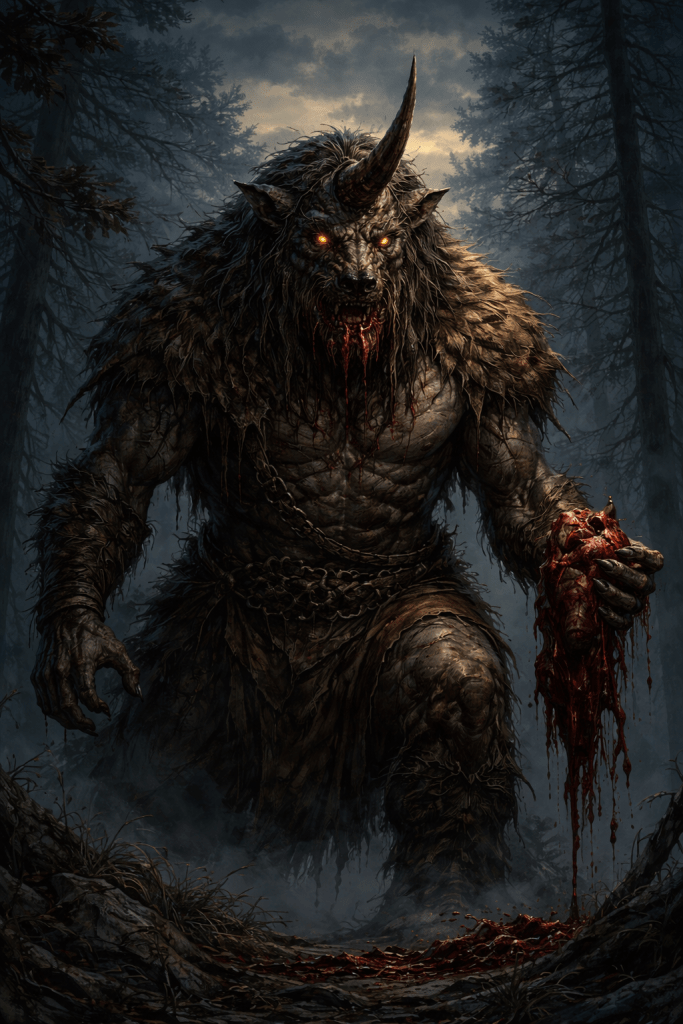
The circumstances of the crime were most morose. After the intense questioning of multiple eye-witnesses, the verdict was clear: some great beast had come in the night, from the forest, with a head that “blotted out the moon,” the commissioner had said. The men described a creature possessing a protrusion, like a spike that came from its boar-like face.
I have seen the vestiges of the house. The rafters lie, splinted. The derelict rests on the outskirts of the town near the county forest. A family of eight (may the Gods spare their souls) lived there. They went by the name of Smith. May their departure to Valhalla be swift.
It has been said, through local gossip, that Mr. Smith partook of certain beastial rites of bloodletting and offering- that his fascination with the occult contributed to his demise. Through neighborly predilection, it is thought that his flock of sheep had begun to dwindle. As he was no longer able to give provision to the beast, it took his family as recompense. The occupants of the Smith house were eradicated, then eaten.
No members of Alexander Smith’s lineage remain. Bloodied bowels, and limbs line the foundation. Entrails and brains smear the ruination of furniture.
If this is no hoax it is clear the giant has a penchant for human flesh. We do not know when it will strike again. It is under these circumstances that I pray for your aid, Dear Vaenir.
A Letter From The Earl of Canterbury County (Third Mouthpiece to the Vaenir) Dated March 17th
Mayor Balthazar,
Our correspondence has yielded many heartfelt discussions, so I will reiterate our sorrow at hearing this unforeseeable, dire news. We, the Vaenir, grieve the state of your affairs. Your situation is most grave, and I pray you Godspeed in your endeavors. Know your supplications are heard. For the sake of morale: this is the speech you must deliver to your fellow countrymen. If asked what muse possessed you, your retort will be the “enlightenment of the Vaenir.” Second, you must destroy this letter after you enact its purpose. We must establish order on a perceived basis of truth. Were any falsehood to spread, the People would lash out severely, and the esteemed livelihood of the Vaenir would be in far more grave circumstances. Remember your place as figurehead. I urge that the following extemporaneous discourse be delivered, at noontime tomorrow. I am certain that this would restore both the Order we so cherish in the capital:
SPEECH OUTLINE
INTRO:
Sons and Daughters of Canterville, (Enunciate!) I write to you after spending a tedious hour in the enclave of my study. You have offered my family food, board, and security as the mayor of our town, and for this we are grateful.
A. The reason for this discourse is not to exploit, but to remind us of the times in which we live. (Gesticulate!)
B. The foe we fight is no man. (Pause for emphasis.) I will reiterate this to reprise this haunting, and to validate that your fears are most founded. It is not my intent to reinstall this hysteria, only siphon the core energies so that we may rise again.
Let me provide an illustration:
A great river has many tributaries, and it is the allotment of such branches that impart its strength.
A river has no recourse. There is only the adamant resolve of flow, the charge of progress towards its end: the sea.
We, Country folk, course in a similar way. The time has come where we can no longer cower. Courage must possess all who oppose the beast.
I will quote the Late Cleric, whose advice we should undoubtedly heed:
One day our Sons and Daughters will rise again. They will inhabit that Fair Country, forsaken by the liars, and the warring. They will pry off their shackles with a might they will have never known. They will crush their bonds, and from the hands of their debtors they will rend their freedom. “
III. Meanwhile, we must congregate, as we seek further instruction from the Vaenir.*
(End of discourse)
*Depart swiftly. Accept no questions. Inform Us of any further incidents, especially if the people murmur.
A Letter from the Mayor of Canterville, The Second Ward of Canterbury Dated 17 March
At your behest, I delivered the speech with utmost tact, and discernment. I noted a calmness overcome the People, like a sanctuary, as I relayed the enlightened thoughts of the Vaenir.
It beset me with such couráge, Dear Vaenir!
It wasn’t until the end that our resolve was shaken. The beast came rushing from The Forest Sauvage. It lumbered over the field with a look of fury as I have never seen. Then, he took the poor farmer from the midst of the field, and ate him. I saw the blood spatter, and the bowels torn asunder. The teeth sunk into his torso.
He left the legs, at my feet upon the dais. “Leave the flesh to rot,” said the beast.
“Soot between my toes. Insurrection is mended best with martyrdom.” And at this I knew the farmer had been made an example of. We do not know the beast’s origin. Plucked forth from the reverie of which a few men could allow utterance and possessed of a reticence that encumbered his psyche. Yet by his colloquial intonation, he was learned by the works of Men. Despite the lilt of his kind, he had perfected the woodspeak of the people. How he had done it, remains a mystery. I suppose, he lived among men once-but fell from grace. By those in the Valley? We do not know. There are things which must be laid to waste, and if they rise again they must be slain, and burnt with fire. Afterwards they are not to be spoken of. Fear not my dear countrymen. For I was told, a fortnight ago, from a traveler whom I believe to be a Northerner, that a certain giant lies in your midst. The men of the high hills say he is the last of the Jötunn”–yet the Cleric reasoned, he might well be Nephilim, or Rephraim. Regardless of what he is, do not forget your birth. We are men of the Valley, and the Valley has bore you. (Cease your decanter momentarily; take a breath from the supposed “fire” in your loins. Empathize!) There are none so keen as to say they know the myth of man. For if this knowledge were known, so too would his future. We would deny the oppressors their way, and obtain our birthright. Were this concurrent legendarium to be forged we’d be of singular consciousness, but alas we are not. By the mirth of Aenir, let us pour the blood of our enemy into the sea. Libations. Egads.
A Letter to the Second mouthpiece of the Vaenir, dated March 31
The discourse went well were it not for the interruption. The beast, this mortal enemy of men, chose to strike at a time most inopportune. (Might I suggest that we garrison our town with reinforcements?) It came, rushing from the forest with a fury as I have never seen, possessed of savagery and hunger. Never had I seen him in the daylight, as I thought he preferred the cool concourse of night. I thought that He operated his wicked ways in the darkness. He sensed the dissention in my voice, and as our eyes met I saw a cavernous intelligence of marked wit and cunning. I saw the horn between his eyes on his forehead, as the ivory gleamed in the sun so I loathed it. And as he ate the cleric his eyes rolled over white with relish. Soot between my toes, he said, fool amongst men. And at this happening he roared, spitting out the head, and tossing the legs in the midst of the audience. This was his stipulation. Do him obeisance, with a slaughtered lamb or a goat. Or Offer him a daily sacrifice; a man on the first day of the week, a woman on the second. If any days were missed, he’d go for the family. At this speech, he told us his name–his real one given at his desolate, decrepit birth: Fjord, The God king
A Letter from the Second Mouthpiece of the Vaenir, Alexis Antoch, dated April 2
Mayor Balthazar,
Know that the Sons of the Vaenir will do whatever is necessary to rid the country of this mania, and restore Order. I have petitioned for Aid, and Recruitment. It should be arriving in the quickest possible way. We will send you a sign.
Meanwhile we urge you to continue imparting integrity into your fellow folk.
Do as the giant says, an offering to assuage his anger.
A Letter from Ignatia Allen, daughter of Balthazor the Mayor of Canterville, to the First piece of the Vaenir, dated May 1
My father, the mayor, was eaten today.
After a month’s time we have lost the last of our livestock, and have not had any surplus besides wheat. Upon learning this, and that there was nothing else for the Giant to eat, he offered himself. As atonement the Giant acquiesced, and took my father.
It has come upon me, his daughter, to oversee the workings of our town. We No longer will we lie in terror for the giant, the beastial half-man to eat our livestock. Why allow him food from the mouths of our children? The monster has raised our storehouses, and tainted our river with his excrement. We can no longer go on living as we do. I foresee an altercation on the horizon, with the beast as the victor. I will keep this belief to myself however. I smile for the sake of my people. On my promenades throughout town, I see the Melancholy in the face of my people. With their eyes they implore me: sustenance, and housing. Of a kind word, a smile. I have considered taking these matters into my own hands, and after my inquiry with the Lady of Bath, Canterville has but few options.
The only manner by which we can rid ourselves of the beast is by finding a few strong, able-bodied men to slay the beast.
I must lead them for my father’s honour.
Tonight, we congregate to slay the beast if we cannot receive aid.
A letter from the First Mouthpiece to the Vaenir, Cyrus, dated May 28
I strongly counsel against this opposition. Consider your townspeople, and consider your actions at this time. There will be many casualties.
I command you to wait.
A letter from Ignatia Allen, the daughter of Balthazar Allen, the former Mayor of Canterville, dated May 29
I will not.
A letter from Cyrus, the First Mouthpiece of the Vaenir, to Ignacia Allen, dated May 30
We tire of your insubordination Ignatia. If we lack unison, Our allegiance is now to the enemy. Consider this a breach of Contract. As such until your condition changes, we will limit any further contact.
A letter from Ignatia Allen, the Mayor of Canterville to Cyrus the First Mouthpiece of the Vaenir, dated June 1
Consider your words, Mouthpiece. If that is the way, then so be it. My conviction is that the words you speak are your words, and not that of the Vaenir. There are no gods amongst men. If there were, the question would elude us all.
Let them come down from their lofty city of Splendor. Let them forgo the honeysuckle in their Elysian Fields, and their Dance of the Hart for the alarm of anarchy and tumult. Rouse them from ephemeral slumber. Our mirth is the shedding of their blood.
I have lost many countrymen. After my father’s death, I now see the hopelessness of your way. Tomorrow night I will take it upon myself to slay the beast of Canterbury forest. I will tell no one about this venture. It is likely that I will be slain before dawn. I fear not the loss of my life, for one sacrifice will inspire my citizens. A letter addressed to the Lord of Canterbury County (the first mouthpiece to the Vaenir) from the earl
The serfs know of the Vaenir! This is not a concern, but a fact.
A Declaration of Independence from the Sons And Daughters of Canterbury County, a letter from Mayor Ignacia Allen Mayor of Canterville to the “Vaenir,” dated April 4
I have slain the Beast. It has been felled.
Scum, enclosed is the horn of the Canterville beast of The Canterbury forest. Take it as a token of our proud independence. We have slain him without your aid. Also the object is but a remembrance of lives lost, a cursed thing and We do not wish to have it in our possession. Let the bloodguilt of this ivory horn rest on you. Let it lie as a symbol of our obstinate disregard for you, and our piercing desire for the upheaval of your system.
Monoliths of fear will rise again, but we will overcome them.
Signed,
The Sons and Daughters of Canterville, The Second Ward of Canterbury County
What skills or lessons have you learned recently?
I have learned that sometimes the best of things are learned in the most trialsome moments. Difficulty can mould us, and refine us. Aggravation or the taking of offense does not result in mediation, growth, or learning. And instead of project, we must pause, and reflect. Digest.
Being an adult requires you to sometimes discount belief systems that you may have previously held. When you know better, you do better. The latter is not my own words. Look into it.
Words.
Words have power. And so does the absence of them.
Words, exist in texts.
However, it is interesting to me that if a book of text exists, and has existed for some time – there is a reason for it.
If a person goes so far so as to say that a legitimate book of text is meant to stand for an ideal, within said tribe or understanding: one may substantiate as this then, as truth to a people.
However, a belief is ones own, and ones own to carry. It does not mean that all people have to hold it, and it most certainly should not be forced on others.
In regards to the Inner Child, many have spoken on this concept. While we may lack accrimonial knowledge, as to how to grow sometimes we must recognize why we grow.
It is not by force, and it is not by logic itself – but rather what our knowledge base proccludes on over to us.
There is a state of exemplary knowledge that a person may go through and understand, and it is unfortunate that others are brought through this proclivity.
This is not a topic for Old men.
This is for the Middle aged men. Where have we gone to? Where are we going?
Will they continue to deceive? Or will they not?
I have chosen, with my free-will, not to deceive with what I know.
Though I recognize how systems work, almost to the minutae, I care to provide the healing. Or, as one would say metaphorically, apply Gillead balm.
Unfortunately, an individual who has caused the injury, is rarely the one to heal it.
I though, recognize that a person can turn from their way, and at most cauterize the wound.
To recognize that you were the source of injury, is a difficult thing. First, it must be acknowledged, that you were the one in error, and therefore understand that you are not the most ample one to heal it.
You cannot stay in the same place you were, otherwise the injury cannot be healed.
No. You must put yourself in the Third person, preponderantly, Omniscient, to recognize what both the injury is, and how you will heal it.
Acknowledge the facts of your plight Son, then work accordingly with your team to fix it.
In recognizing my inner child, I have come to the conclusion that it is required to come to terms with this fact. Why would I have acted in the way I did? What non-stoic absolutism did anger hold sway with was not recognized or understood within said nervous system? How could a man of knowledge falter from such a cause?
And can he rise despite repute, and public disclaim? What happens when we think of things in the Third person, outside of what others may think, say, or do? And furthermore – how can we educate others outside of that mental coral?
That is the subject of my inner child that I seek to resolve, outside of some Freudian Oedipal complex.
That is the subject of: Honor.
Being a man of honor is the man of the hour. Asiatic countries understand this.
But a person’s character is most noted when they take a stand for the right thing.
Now I hear MLK’s words, “the time is always right to do what is right.” The quicker the better. If you’re on the wrong bus, don’t stay on it. Otherwise you’ll go further in the wrong direction.
That, for all it’s worth is worth noting that my actions have been very child-like. And despite this irony, well I’m willing to admit it.



 The Nebuchadnezzar magazine