The Nebuchadnezzar magazine
A quarterly e-zine. Music. Health. Wellbeing
-
Last edit 10/18/2025.
E.K. Anderson
Nebuchadnezzar magazine. Flash fiction. Copyright 10/17/2025.

I was asleep when I saw a flicker of light in my dream. It peered through the lens of my mind, a non-corporal place of which I deem my statutory observation.
Anyway.
Away from that place, I opened my physical eyes, and saw the last inkling of aery dawn through my window.
It dappled upon my eye lids, golden and warm and so I welcomed it.
Upon my awakening, the house was alerted as to my rousing. The television turned on, the auto-biological templates took my measurements. The doctor, an automaton, took my vitals. My breakfast was being prepared by the latest version of the Maker. The coffee was set.
Today I am here, I said to myself. Today, I am.
Today, in this instance, though, there was no sound from the television, no hum from the garden, no sound of birds.
The children did not laugh and that was when I knew things were off.
There was peace, but no rivalry. No wind in the trees, no semblance of rivalry on the news. Just me and the Sun.
Today, though, I was finally awakened from my slumber, which felt as if I’d slept for an age. I’d remembered my Dream. Me and my Greater demons have an understanding, as to my chosen manifestation.
It was twilight and that golden hour shown onto the slate of my reflection. And the light that shown through the effulgence of the screen was dim.
The street was quiet. The antique gramophone, of Rêverie a piece by Claude Debussy.
I went to bed then. Then there was a sort of twinkling in my eye by which the galaxies erupted. The mail man came in.
Yet, I was a King in a house. A King with a dwelling, without a consort. A King who looked upon the iron of his fist, and gazed up at a dangling sword.
And this was the time in which I knew I had to rise. But sloth, quelled my erudite nature. Such that I sought to delve back into painless repose of my Observatory of Sleep.
I rested my eyes, and entered my observatory.
In the right quadrant of my vision I saw a mist. In that mist there was a cosmic spark, such as that one would have begun at the Beginning. That mist was gray; it frolicked amongst corpuscles of red sprites, and blue bolts, and green flourishes. The cloud hovered in the living room. The cloud: a sentient wilderness.
I observed laying on the couch. But I could not move.
And then came the voice of the banshee. It screeched from inside the cloud.
Then, came a low growl.
A gray paw came out from the cloud, drenched in rainwater.
On the kitchen table materialized its form. The form I saw was of none that can be described by any man. If I was a biologist I could not have classified it. The type of entity that this animal was was of some sort of understanding that I do not know.
It stood on the top of the kitchen table, then stepped down, and from that point of understanding it came down. Six limbs in all, with ear like a hound. It turned at me, but I so no face. I looked upon it’s face, and the flesh twisted and turned. An animal with a face like a clock wrought of flesh. A monster of Time.
Then from an anomaly – a portal – in the living room, I saw another. It was a smaller thing, I supposed of its order. This one beset with wings in different spectra. The wings flapped despite it being beset to the ground. Yet, this one had a mouth. It howled, and with a cyclopean eye it came to me.
I could not move.
It licked my shin, and panted. My eyes panned to the Monster of Time. It faced me. It climbed down from the perch of the kitchen table. As the second hand moved upon its face, I heard the sound my heartbeat. The second hand ticked in conjunction to the beat of my heart. In tandem.
In disassociation, I looked outside at the I dreamt of sunshine. The sunshine that I dreamt of was golden in effulgence, and the rays sprayed throughout the effulgence. And that was when I could come to the aura of twilight, and the dream itself.
Then, I remembered the Consortium by which I had at one time been a part of had spoken upon these things. The anomalies. That sort of understanding, the physicists, and doctors said: was what the people could not understand.
Yet there will be light upon the horizon, said the Oldest man. There is always light, I said.
Some did not understand my place. Some did not understand what the soothsayers, and the Sorcerers, and the Sorceresses, and Priests had said.
But the White Witch did. I remembered all of them now, as the Monster of Time came to me, its skeletal structure lanky and lathe.
My heart beat harder. The ticking of the second clock on the Monster’s face increased.
I sought to wake up. I continued listening to Claude Debussy, to the ephemeral music, the pinning of the piano keys upon the gramophone. Then I closed my eyes, away from the gaze of the Monster of Time.
But still it ticked.
-
Edit 1 Sep 11, 2025
A short story by Eric-Anderson Momou (E.K. Anderson)
– Copyright September 2025, The Nebuchadnezzar publishing house.
The day was March the first, a Wednesday—I forget the year. Whatever, it was before the Ides of March. I’d just about had it with the job so I throttled it at a hundred down I-94E for what felt like an eon. I’d been fixated on this project for well over a month now. The consortium I worked for wanted a new advertising pitch and I was the intern. Call it luck, our company spewed out profits for every kind of investor. We had entrepreneurs, politicians, lawmen and even drug dealers nuzzling us for exorbitant profits. In the end they always got what they asked for, and we never exceeded the marginal cost, so our share was seventy percent.
My job title is Social Strategist. Do not misunderstand me; I lack charisma, which undoubtedly affected my choice in applying. But the job description was odd, so I kept reading. It entailed that the ideal candidate should possess traits like:
*clairvoyance
*Introversion
*being keen/observant
I didn’t have the gift of foresight On top of that, the job posting didn’t specify a degree, but I thought my GED would help things, so I applied (in email of course).
They called back the next day and asked if I was interested in the position. To this I said yes, of course.
I ran a blue streak, monologuing about my proficiencies but the guy on the other end droned on. Finally, he said my story was bullshit. Anyways, he said, they had an opening: for one fulltime social strategist.
“Can you make it in,” he asks.
“Sure,” I say, “What time?”
“Tomorrow at 7.”
So tomorrow, I wake up at five. I eat a good breakfast, because that’s brain food and I shave. I haven’t shaved in over a year, and with my yarmulke I look like a rabbi from the Talmud. I wear a buttoned up suit,
I enter the door at 630, and meet the receptionist. She’s a girl fresh out of college, with freckles and cascading red hair. I tell her I’m waiting for Mr. What’sHisName, and tells me to wait. So I wait for what feels like an hour, and the time Mr. WhatevertheFuckhisnameis comes out. He’s gaunt, old, and looks like Clint Eastwood. His thumbs are in the belt loops of his jeans
“You’re Jewish?” he says, “I’m not an Anti-Semite. Just curious.”
“Yes.”
“Perfect. You’re hired. What’s the earliest you can start?”
I shake my head, “Tomorrow.”
“Seven then.”
I shake his hand with my left, awkwardly.
“And your name is?”
“Forget about it.”
So I drive back home. I’ve got the job—which I don’t even understand to an employer who has no name.
Turns out, the job was easy.
“Watch this,” my employer says. “It’s important training.”
We were at a pub in a shady part of town. Evidently some statesman was there, and a retired convict.
“Hey guppy. You see that?” he said. He gestured to the silver briefcase the statesman carried. Provocatively, the two men scurried into the bathroom, but there was nothing covert about the deal. Mr. Noname pulled out a pair of leather gloves. The
“Gloves. Remember you were never here. You tamper with evidence you’re fired. You’re faceless, nameless, and scared shitless. You understand?”
I faked a humble nod.
In the bathroom, my boss takes a piss.
“Vinny called,” my boss said. Then he punched him. I’m sure he broke the guy’s face, because I heard his nose crunch. He kicks the other guy, Bruce Lee style. When he fell I heard a pop, then I saw his clavicle had jutted out.
We ran.
*
In the car, I ask who Vinny is. My boss shrugs. He made up the name.
“A corrupt politician has a lot of enemies. Probably can’t remember who he’s shit on.”
“And you punched him because?”
“Flare mostly, but I made him afraid. By making him fearful I stopped the deal, which strengthened national security. Why? Because truth is the other guy was a militant for the Jihad militia and securing a drug deal in Panama would have opened up whore trafficking. Whore trafficking, is a perfect disguise for
“A punch is all it took?”
“That’s right. Like those comic book villains. Just one punch.”
“Social strategy, my friend. That’s all there is to it. Do what you need to do to get a desired outcome, and then scram. Vamoose.”
“Point taken,” I scribbled in my notebook how fucked up this was.
“Ducks are flying low this season,” she said. “You missed Gandhi at the last mile marker. It’s okay you’ll see JC again at the next exit.
“That an attraction?”
“JC? Heavens yes. Just keep driving east.”
“Drive, east son.”
-
When you think of a bully, what do you think of?
Do you think of a big, hunky kid with freckles like the Sandlot?

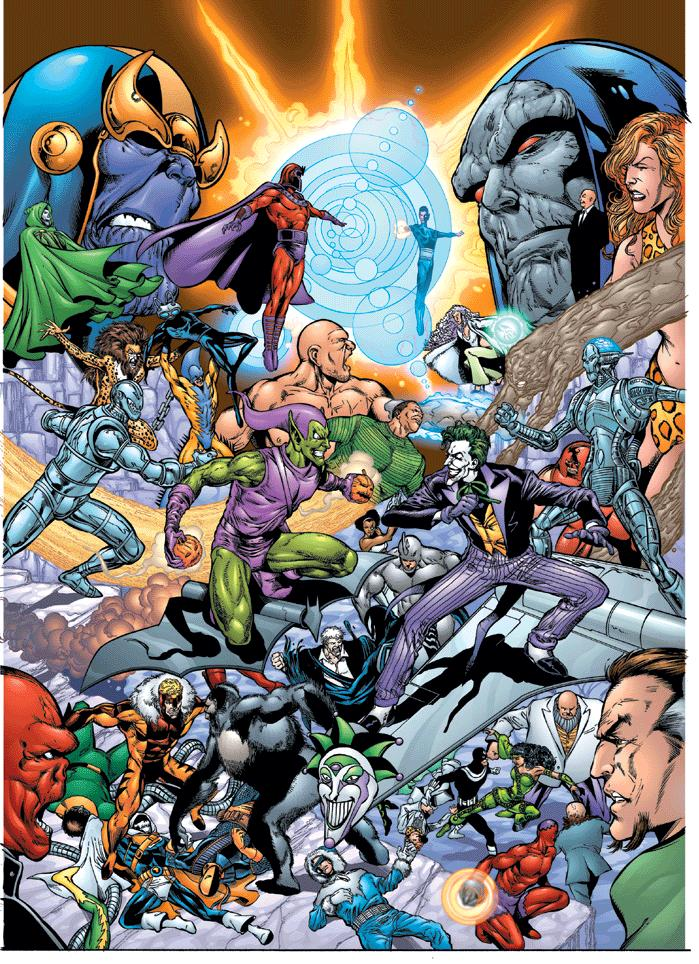
Or do you think of a sly conniving, serpentine weasel sort like Voldemort, a politician like Magneto, or a muscle-bound intellectual like Bane?
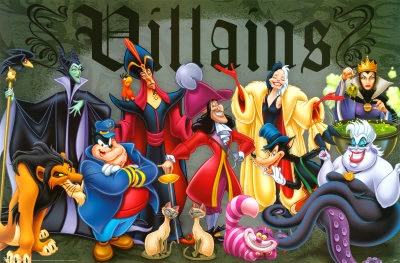


I was working at a warehouse the other day I met one.
A six-foot five behemoth of a man. Wrought with tattoos, and a set of glasses plastered to the back of his head. Classic MAGA. (I note there is a distinct difference between MAGA, and your conventional Republican.)
MAGA comes out of the woodwork on occasion, and so does their racism. Which can be tapered with a little bit of mental aikido.
Anyway.
He was a bald bloke and swore like a sailor. Interesting I thought, the verbal imagery I got was a synesthesia rendition of a speech bubble, such as one would have for comic books.
I imagined literal trash coming out his mouth, and as the refuse fell nothing he said held anything value.
As a synesthete, with experience in teaching pedagogy, I thought of my autistic kids I taught in college. Most understand that there is a manner of understanding certain things by which the majority understand them, whereas others do not. Others understand that certain people will have a manner of understanding unlike any or all of them, so they atone for that degree of understanding, by finding a happy medium: this I believe to be empathy.
Anyway. This fucker spit utter atrocities to those he dealt with. Junk spewed from his mouth. Defiled him.
I ascertained that gray matter was not with him. Or in him.
Then I thought a manager can be one two things.
A person who uses subterfuge to get what they want or to speak the truth and have that be the arrow into which time flies.
He mocked the kid. Said he was half black. Then he turned around, and saw me.
And then my countenance changed. I met him with a gridiron countenance, fixed, and dead. I suppose that’s my normal basal state, and that is
Id met him face to face, my Goliath alter ego, my shadow my persona non grata who I was intending to meet with absolute certainty.
One thing, I have noted is that these bully types You command respect you do not use subterfuge to regal it, or manipulate others to do so.
The verbage of his idiocy came through at his mouth most inopertune that I took a step back, and glanced.
I looked at the guy, he said that to, I looked at the fuckers next to him who were his flying monkeys, I looked at the idiots who thought he was in charge, satiating his ill perceived anger. Then I looked at me, the man on the spot on the hour.
My gutteral reaction was to shout obscenities. My gutteral reaction was to say because he’s half black, are you kidding me?
I’m fully black.
That is my son.
If that is who chastise, chastise me.
But you will listen to me.Y
Ou come to me with a sword a word and a spear.
But I thought against it, as this was a problem they were all having and getting rid of the fuck who did a good job would have implemented me in his place as an alpha male.
So I thought best of it and said nothing.
I thought, what best to do in this regard?
Join the team, as I had once done – or to take a stand?
I chose to take a stand.
I chose to go even
What the fuck did you say?T
At he’s half black.i threw a box.
You want to know that I’m full black.
What’s that supposed to mean?
For one, my sense of intimidation is low key. I don’t feel intimidated very often.
But the notoriety of having glasses plaster behind him, made me think if Professor Quirrell.
It made me think, “I’ve got eyes in the back of my head, motherfucker,” and it was that self-reflexive knowledge that I looked in upon that gave me both a sense of awe and wonder at (enter Victims name #Viking’s) name.
He was self aware.
Most bullies I deal with are not.
In fact, he was mirroring me.
This was the first time I became aware of my reaction.
I used to be lowly keen to my neurologically responses, but this guy triggered me.
So then I thought okay, why is my own reflection triggering me?
Well, I soon figured out why.
This guy was imposing a perceptual notion of being watched by wearing upside down glasses on the back of his head.
They were upside down mind you.
He shouted to the guy on the ground of the belt what are you doing out those boxes in whatever…
And he looked at me and said,” I just give him shit because he’s black.”
Because, he’s slow he didn’t immediately recognize his mistake.
I did however and did not not react.
He went ahead and said,” tires go under the belt, man I feel bad for the kid. It’s his first day.”
That too triggered a response in me.
Thinking, maybe he’s remorseful.
So I took the tires and threw them under the belt to my trainers request.
Problem was he threw out everything from his trailer, and restacked it according to company protocol.
Not only did he redirect his anger and extend it to that who needed assistance, but he corrected my own error.
Think about that.
A strong man being thrown out of work, because he was doing things the right way.
I realized that I needed him, that I could use him.
Problem was I was self aware of my own inclination.A
I then, posited a catch 22.
Should I take out a notable worker of said company at the expense of everyone who followed him, so that I myself could take his place, or could I teach him kindness.
I chose that teaching him kindness was the best option, as it would yield me the best results in teaching others to teach others.
Spidelli noo the lanky guy said, use leverage. I don’t lift without a lever. He was wirey and lean, the kind of guy who looked like a runner.
He was forty but his truck looked packed, and I was surprised he could lift so much.
How do you do it, I said.
I use lever, he said.
I went through my highschool physics class. F =mc^2. But a fulcrum yields:
I thanked him for his Newtonian physiques. Then the bell rang.
It was the end of our shift, and the man closed his truck trailer.
I looked at my trainer, a former manager and he threw the tires into Mohamed trailer.
When are we in next?
Tomorrow at 3:15.
Liberal Republican bullies have one main feature they hate.
Public opinion.
You see when you take public opinion down they have no choice but to yield. A narcissist will falter under the crumble of their own reveal.
They will be the Goliath that taunts, because they believe that all are in subjection to their gaslit system.
Problem is when a man comes from outside that moral vector, and estabhesbthat what they’re doing is bullshit, and exposes that to them to their public harassment they have no choice but to falter.
A true narcissistic bull will pretend to bow the knee. They will secretly use flying monkeys at your expense to pay for your indescrrtiion
However if you go a level up (teacher) who are aware of what they are doing, that bukly goes down up to the point of graduation.
Farewell Donald Trump.
Goodbye, you Bully.
Bullies come in all shapes and forms. They arise as people without the skillset necessary to verbalize what they need. They appear as children in an otherwise playful playground. They are sometimes, the types of individuals that arise as a person may not find to be personally acceptable.
A Bully, that I think of when I look at the Sandlot, I think of the biggest guy on the playground. The guy who nitpicks on people that are too small to fight their own battles, and as a result of this tries their utmost to do better and do the best they can.
A bully is what a person looks at and supposes there to be a state of understanding by which they cannot find a better way to drive their mission to them. What then, becomes of the man who grows up as a bully?
The term, “Bully,” is derived
Let us look into psychology.
There is a method by which they may find it difficult to acclimate to regular society. They may find it hard to express themselves, and as a result they come to a conclusion that must be aggressive in their resolve for greater justice. They find that they have a means of addressing somebody, that is not the way a person should be addressed.
They will find a manner which they are to superimpose their necessary understanding of the world, and superimpose that onto others. With agrression, or with a state of unwavering authority to superimpose their freewill upon them. That is something we must come to understand. That a narcissist, is a person who does not find a basal understanding of the world at large. They are trying to make sense of it through the vehicle of people.
Such bullies may use idle threats, subterfuge, a manner of speaking that induces fear, and a way by which these individuals find a better understanding of their world at large is by causing the world around them to adapt to their will.
While we may not understand the Narcissistically inclined person, we may understand the slew of other Cluster B disorders. These may most notably be BPD – Borderline Personality disorder, anti-social personality disorder, as well as NPD.
NPD may be considered the worst of these afflictions, because they are not able to be cured. A person with Narcisstic personality disorder does not see themselves as wrong, and when challenged about the validity of any of their claims, there comes a point by which they must find the truth in opposition.
When a person does not see the difficulty in their ways, they find it hard to obtain an understanding of other people. This is when they have found it hard to understand that the hardest part to acknowledge is looking at themselves.
A person with Narcisstic personality disorder is said to hallmark certain traits. The traits by which the hallmark can only be reflected by the way in which they observe the world.
The grey rock method, is the only known method to work against a Narcissist. This method which involves starving them of narcissism supply or attention is the main medium by which these types must be siphoned.
I’ll have to pull a Malcolm Gladwell here.
In his book, David and Goliath: Underdogs, Misfits, and the Art of Battling Giants — Gladwell speaks of the notable figure of his book. There happens to be a state of affairs by which an individual must most notably understand that a hero must be surmounted by the rock of the human being and the skillset that they pervade, as well as being able to surmount over one’s challenges.
-
The Birthmark: A Jungian analysis of love and Obsession
Eric Momou
UW – Milwaukee
Copyright 2023
The Birthmark stands amongst Hawthorne’s finest works of the male Jungian archetype. In it, the reader sees the installments of wayward masculinity, an analysis of the self, obsession, and infatuation. When compared alongside Edgar Allan Poe’s Morella there is much that can be seen in the psycho-social, the psycho-sexual, and the underlying depravity of the preoccupied, obsessed and troubled mind. These works serve as further implications for his readership in the conventional sense in the field of psychology as well as for the implications of interaction in a relationship setting.
For one, The Birthmark stands amongst the most intrinsically honest of Hawthorne’s works, being a masculine account of the ego. To begin, The Birthmark starts with Aylmer, “a man of science” with a forward account of a certain type of fixation that deals with “a spiritual affinity, more attractive than any chemical one” (Hawthorne 1). The object of his interest is his young wife — where they’re wayward, unrequited love is especially transcribed in the following passages as his love seems to transcend a “deeply impressive moral” (Hawthorne 1).
In contrast with The Birthmark, Poe’s Morella begins, quite evocatively with an account of a man describing his friend. Morella, as the reader soon finds out, is not his friend, but his wife. This is to be acknowledged from the perspective of the displacement noted. While Morella is in fact in place of his lover, he still describes her from the onset as a friend. Right from the beginning the reader is forced to acknowledge a sense of separation — more so akin to a sense of distance between the narrator and his beloved. Poe continues in the following passage, “Thrown by accident into her society many years ago, my soul from our first meeting, burned with fires it had never before known; but the fires were not of Eros, and bitter and tormenting to my spirit was the gradual conviction that I could in no manner define their unusual meaning or regulate their vague intensity” (Poe 234).
From a Jungian perspective this must be noted. The fact that the main character does not acknowledge, or chooses not to acknowledge his mate as anything more than “the fires of Eros” (being the kind of inflammatory love one sees in passion) is to be further acknowledged. There exists a disparity here between his sense of self, and his underlying emotion. The emotion of such being that he is not in the same place as his dearly beloved. What then does this mean from a Jungian perspective? What then does this mean from a moral standpoint, and by extentionsion an application The Birthmark?
From a moral standpoint the above is indicative of a loss of love. Says Jung, “The meeting of two personalities is like the contact of two chemical substances: if there is any reaction, both are transformed.” Through the transformative reaction of love, one may discover “the distinction between what one really is and what is projected into one, or what one imagines oneself to be.”(Klerk 1). Furthermore, Lance S. Owens writes in Jung in Love: The Mysterium in Liber Novus, “Yet Logos and Eros are not one, but two. In this case, however, Logos has blinded and subjugated Eros.” Thus, love can falter or seperate. A division can hold two lovers asway, and given circumstance, can extinguish like a lighted flame.
Yet, in Hawthorne’s The Birthmark, the narrator has subjugated one form of love for another. But what is Eros? What is Logos? Says C.S. Lewis, Eros is defined as one of the four Grecian forms of love: storge, philia, and agape (Lewis 7). Eros is defined by “love at first sight” (Ovid 36). Philia is described as “friendship” (Liddell 55). Agape is defined as true “love” or affection from a Christian perspective, such as God’s love for humankind (The American Dictionary of the English Language), These forms of love from a Grecian standpoint, emanate quite prolifically in Poe’s writings. Logos, then, is defined as “a unifying and liberating revelatory force which reconciles the human with the divine; manifested in the world as an act of God’s love in the form of Christ” (PBS.org).
In the above example, Eros is not a defining quality of Poe’s narrator. Rather it seems that there is a Philia attached to the namesake of Morella. There appears to be a sense of distance in this regard, and the flame of Eros –that is the impassioned form of love— is nonexistent. Instead, there proves to be a kinship or a “friendship” displayed with Poe’s narrator, and that seems to be the discordant value upon which the “situationship” of the story is placed from its dysfunctional beginning. The narrator further goes on to rectify the means of their courtship by saying, “Yet we met; and fate bound us together at the altar, and I never spoke of passion nor thought of love” (Poe 1).
How then is love described in the following pages of The Birthmark? To summarize, Aylmer is a man beset with the fixation of the resolute, just, and picturesque. The birthmark upon his wife’s cheek seems to set her apart from the idyllic ideal of his own reckonings. Says Aylmer, “Oh, do not tremble, my love!” said her husband, “I would not wrong either you or myself, by working such inharmonious effects upon our lives. But I would have you consider how trifling, in comparison, is the skill requisite to remove this little Hand.” (Hawthorne 6). In this example, Aylmer’s character is fixated on “the hand,” believing that the outward manifestation of his expression of love for his young wife would be to remove it.
In this above example, we see that there is indeed a distance placed between Aylmer, and the image he has of his wife. Says Jung in Liber Novus, “The Gods envy the perfection of man, because perfection has no need of the Gods. But since no one is perfect, we need the Gods.” In this mannerism “Gods” can be exemplified in the personhood of Aylmer, a man, beset by triviality, wishes to take on the mantle of godhood unto himself by eliminating a birthmark — a natural right of the woman he so idealizes.
Furthermore, this erroneous attribution of self-proclaimed godliness is further shown in the following passage:
“Aminadab! Aminadab!” shouted Aylmer, stamping violently on the floor…This personage had been Aylmer’s underworker during his whole scientific career…With his vast strength, his shaggy hair, his smoky aspect, and the indescribable earthiness that incrusted him, he seemed to represent man’s physical nature; while Aylmer’s slender figure, and pale, intellectual face, were no less apt a type of the spiritual element” (Hawthorne 7).
It is clear from this example that Hawthorne wishes his readership to make an affiliation between the binary oppositions of the physical and the spiritual. He wishes there to be an understanding, that there exists a physical or ‘brutish’ aspect to his servant, Aminidab’s, creative aspect that personifies his material creation, and Aylmer’s spiritual one. The spiritual is something which Aylmer attempts to embody in himself through his predilections of the natural sciences.
Because there is a limit to what science can achieve, this should be noted as an obsession. Says Jung, “We have a deep, healthy, and compulsive urge to individuate, to develop our psychological potential. If that urge is blocked we resort to neurotic, unhealthy compulsive behavior” (Trosclair 1). While the act of being a scientist is not an obsession in of itself, the “neurotic, unhealthy” and compulsive behavior here is Aylmer’s fascination with the removal of the hand upon his wife’s cheek.
How then is individuation recognized in The Birthmark? Individualism is described as man’s trifle with nature — being the ongoing struggle to prove his own Logos for what he believes to be a version of his own creation. This can be exemplified in the following passage as Aylmer toils:
“Not less singular were his opinions in regard to the elixir vitae. He more than intimated that it was at his option to concoct a liquid that should prolong life for years, perhaps interminably; but that it would produce a discord in Nature which all the world, and chiefly the quaffer of the immortal nostrum, would find cause to curse” (Hawthorne 10).
Aylmer attempts to prove himself above the category of deified knowledge. In so doing who starts to exhibit a fixation, or a monomaniacal tendency. This is made evident with the above quote, and through the self ascribement of Logos, thereby being the fatuous love that Aylmer has displaced, on the part of a godship, to his beloved wife. For one, Aylmer’s love does not serve under the previously ordained categories. He is not in Philia attraction with her, as Poe’s narrator is. He is not in Agape love with her as that would be the most intense, and most deserving of earthly penchants. No, he is under the spell of the godly attribution of love — a false Logos–that is the underlying notion that he himself is Promethean, undergoing a state of self actualization. This sense of individuation, therefore, is made manifest through Aylmer’s twisted sense of right and wrong, utilizing science as his main vehicle to produce an individual of perfection in his young wife, Georgiana. How then does this relate to the masculine account of the ego from a psychology perspective?
If one were to consider Freud’s take they would come upon the underlying note that a displacement exists here. Freud, noted for his take on the “castration” and “the fear of death” relates poignantly here (Eysenck and Wilson). Says Eysneck and Wilson in The Experimental Study of Freudian Theories (Psychology Revivals). “Freud first put forward the concept of castration anxiety in connection with his theory of the Oedipal conflict and the psychological processes employed in its resolution” (Eysenck and Wilson).
This “obsessive love disorder” can affect the genders equally. While the interpretation of the Oedipal differs markedly the masculine ego from the Freudian perspective relates directly to Carl Jung’s “Electra complex” in that there is a codependent desire for oneness or completion on the part of the father and daughter archetypes. This type of connection may be made manifest in relationships, or in the obsession or “obsessive love disorder” (Freud 70). In the case of Jung, it is believed that Aylmer might be manifesting his personal state onto Georgiana — thereby projecting onto his “love object” (Jung 191).
Furthermore, in Morella there is a haunting take on the horror genre in that that fear of replacement of the masculine self is brought upon by fear of impregnation –which the main character is not too observant to. This is a direct correlation to Jung. Impregnation, therefore can be actualized as meaning the loss of the masculine sense of self — in essence the loss of individuation as proclaimed by Jung. Says Poe in Morella, “My child,” and “my love,” were the designations usually prompted by a father’s affection, and the rigid seclusion of her days precluded all other intercourse. Morella’s name died with her at her death” (Poe 238). In Morella Poe makes it clear that through the death of Morella, that the narrator has certainly exacted his purpose. In essence, the masculine Oedipal complex has overshadowed the feminine, through a complete annihilation of her.
This, for the conventional and modern reader, is a difficult paradox. For the nineteenth century readership of his time, both Poe and Hawthorne’s short stories were hallmarked by an underdevelopment of the female archetype, made mostly manifest through their plot structure, and masculine animas. The ideal, then in The Birthmark is to find oneness and semblance with the idyllic, manifest through the physical. This for Aylmer, has been a pursuit in finding his own complement through Nature:
“Here, too, at an earlier period, he had studied the wonders of the human frame, and attempted to fathom the very process by which Nature assimilates all her precious influences from earth and air, and from the spiritual world, to create and foster man, her masterpiece. The latter pursuit, however, Aylmer had long laid aside in unwilling recognition of the truth—against which all seekers sooner or later stumble—that our great creative Mother, while she amuses us with apparently working in the broadest sunshine, is yet severely careful to keep her own secrets, and, in spite of her pretended openness, shows us nothing but results” (Hawthorne 7).
For Hawthorne’s character of Aylmer, the fixation upon nature, and his control of it has become a monomania. Monomania, defined by the APA Dictionary of Psychology is “extreme enthusiasm or zeal for a single subject or idea, often manifested as a rigid, irrational idea” (APA Dictionary of Psychology). Therefore, it would seem that Aylmer’s affliction having divine providence over nature supersedes his affection for his wife. As a direct result, his wife too has a fixation on appeasing her husband. It is strange that this is not an acquiescence or placation, but a plea for her to remove it as well: “Danger? There is but one danger—that this horrible stigma shall be left upon my cheek!” cried Georgiana. “Remove it, remove it, whatever be the cost, or we shall both go mad!” (Hawthorne 16). Thus it is through the trigger of the birthmark, a mark that Aylmer cannot control, that they both become fixated on the irrational. This fixation has dire consequences.
The end result for Aylmer and his wife is unfortunate. As a result of his preoccupation with “the hand” on Georgiana’s cheek, Aylmer concocts an elixir to rid her of it. This elixir, which she gladly takes, as a result of appeasing her husband’s monomania, is in fact poisonous.
Thus, through understanding the different degrees of obsession can one begin to understand the psychological dynamics that are at play in The Birthmark. Through Poe’s Morella the reader gains an understanding of the different types of love being Philia, Agape, and Logos. These modes of operation better give an understanding into the codependent and often poisonous form love which is its exact opposite: agape. Finally, these works further their analyses in their respective fields amongst literary scholars, and psychology enthusiasts alike.
Bibliography
“agape” in The American Heritage Dictionary of the English Language, 4th edition, Boston, Mass.: Houghton Mifflin, 2000.
American Psychological Association. “mononmania.” APA Dictionary of Psychology.
C Jung, Man and his Soul (London 1964) p. 191
Eysenck, Hans J. and Wilson Glenn D. The Experimental Study of Freudian Theories (Psychology Revivals) 1st Edition. 1973.
Hawthorne, Nathaniel. “The Birthmark.” Major Writers of Short Fiction, edited by Ann Charters, 4th edition, Bedford Books of St. Martin Press, 1993, pp.
Jung, C G, Sonu Shamdasani, Ulrich Hoerni, Mark Kyburz, and John Peck. The Red Book =: Liber Novus : a Reader’s Edition. New York: W.W. Norton & Co, 2012. Print.
Klerk, Machiel. Love and Individuation. https://jungutah.com/blog/love-and-individuation-2/#:~:text=Jung%20said%2C%20%E2%80%9CThe%20meeting%20of,imagines%20oneself%20to%20be.%E2%80%9D4. Online. February 22, 2016
Lewis, C S. The Four Loves. , 1960. Print.
Liddell, Henry George, 1811-1898. A Lexicon Abridged from Liddell and Scott’s Greek-English Lexicon. Oxford ; New York :Clarendon Press, 1984.
Ovid, Heroides and Amores, translated by Grant Showerman, second edition revised by G.P. Goold (Cambridge: Harvard University Press, 1986), XVI, 36-38, pp. 199-201.
PBS.org. Logos. https://www.pbs.org/faithandreason/theogloss/logos-body.html#:~:text=A%20unifying%20and%20liberating%20revelatory,the%20form%20of%20the%20Christ.&text=In%20the%20New%20Testament%2C%20the,%22speak%22%20to%20the%20human. Accessed December 18, 2020.
Poe, Edgar Allan, Arthur Hobson Quinn, and Edward Hayes O’Neill. The Complete Tales and Poems of Edgar Allan Poe: With Selections From His Critical Writings. New York: Barnes & Noble, 1992. Print.
S Freud, Case Histories II (PFL 9) p. 118-9 and p. 70-1.
Trosclair, Carl. Carl Jung on the Compulsive Urge to Individuate. https://thehealthycompulsive.com/carl-jung-on-the-compulsive-urge-to-individuate/. May 19, 2018
-
Remembering The Road to Pasadena
By Eric-Anderson Kouadio Momou-Copyright 2025
Akissi,I do not know where you will go in the coming year. But, here is a thought I’ve written down. I’ve inscribed it, not for your sake – but mine: so that I may come to terms with what has passed, and what may be.
This is not a story.
It is an admonition, because I know wherever your travels may lead you- you must be cautious. Cautious as to your trekking from off the path of Damascus. Great roads come by few many times. Sometimes many few come by great roads.
Use your discretion as best you can.
I do not profess to know life. Anyone who says they do is a fool. But to know the heart of it – that is to say the hope between the isles of desire, and the keep of desparity- and yet still forge on, as that is life.
I was a boy until our father died; then I became a man. As a young man, I fought to bring myself under the same jurisdiction of discipline. Our Father- His temperament had always appeared calm. Yet, I could not reign my fury, as he had, and so it burned. Unbidden It singed the asphalt, and I could not abate it like a wave that scoured the sea. That boy couldn’t learn; he could not be taught. Headstrong, he strode upon the chasm with a false grit wrought of rusting iron.
There was a time when we walked on King’s street. brazen with bravado, No one could tell us we were young and stupid. None could pull us from lofty thrones of pyrite. None could rob us of our divinity. –not Tsering’s parents, not Finey Jintana’s.There are many streets like King’s in Harlem, and I have grown accustomed to them.
Yet, they are not the same as ours. Yes, there are other Kings but not like our own. I miss That street. The one of our youth.
Our group would gather before the light fell. We reclined the seats in our Chevy –and —hot-boxing and told l stories despite nightfall. We did all this in the Lot, juxtapose to seventh and Booker Lane. And when the light fell we would not return home. That was how we rebelled. The lot was not our own, as the sheer fabric of it has been lost to us.
You have seen the crowds: how they gather at the Capitol. I have walked among them. I joined them for a time in shouts of liberation, but I left once my manhood struck.
despite the vigil there is no oecumism.
On the night you leave the home our mother and father you must pack light. Along with your birth certificate and canned foods, take the vinyl cassettes, my books, and mom’s guitar. It is a sacrilegious thing to forget our father’s boubou, so I implore you to take it. Do not deny yourself your heritage. I am told that You will not need many things in Pasadena, but I know our artifacts are essential.
Could I go back in time, I’d have brought them with me Because The items hold power. They are as vital as the blood that runs through the fleshy foliage of your varicose veins. In my regret I have left them, and this action has sapped me of my goodwill.
With them in your possession, you will summon storms. recall the days you sat in a high chair, as our mother told Anansi stories over cafe au lait . How our father danced to Sam Cooke in his boubou. He told us stories; he sung to you during your conception. These are the yesteryears Akissi, and they must not be forgotten.
Should the vinyl scratch, do not fear: for the songs are not lost. you must pluck them out on the tweed six string from memory. Also, you must sing these stories to your children, so that they may hear our stories like Holy Writ in our song.
Once you have arrive you will seek me out, in the city. You will look in the furthest reaches of it the alleyways, and the school But i will not be there.
and you will tire from your search of me. Then when your sadness will have subsided, you will seek repose from the city. You will tire of the brick and mortar edifices and the smell of exhaust. You will leave Pasadena, once your finances settle. You will break the shackles of your debtors.
Yet As you turn against the tide of change you will meet a man in the city. he will profane your name–and you will let him. And so you will be leaving him. Your fiancé is fate.
When you leave Pasadena, drive through the mountains. Stop the car and step out, because the air though thin , is clean. search for the names of those etched in the slate stone. Our grandmother, scratched hers in with a butter knife; I have left my apothecary there.
In the city
go beyond the church with the steeple, through the sacristy. Walk the streets, but mind the heat. If you must avoid exhaustion, enter one of the many fast food chains, those concrete edifices with air conditioning.
I imagine that behind the defamation of our dispossession you suspect a tear in this fabric. Do you see the puppeteers through it? How they move the people–their marionettes. one after the other the puppets dance. Moved with pencil-thin fingers wound with invisible lace he is responsible for the strained smiles, the obstinate looks, the thrown punches.
Keep the vigil, so that you may light it aflame with the inferno of your voice, and tintinnabulation of our song.
Then the mob will return home, because the way forward is that which bends back.And they will fight, and avenge their blood to no end. But it will be for naught. Their plight is that of fools, and you will know it when you see it.
Once you have left Pasadena do not forget our Father’s admonition:
When you sleep, dream of dawn.
Then you will remember the morning. -
DRAFT #1
E.K. ANDERSON
THE KEEPER OF THE SUN
In my youth, I was a Keeper of the Rising Sun.
Believe me.
If I could explain my previous occupation I would, but the specific processes are nebulous – beyond comprehension.
All you must know, is that my job was an important one – that I once set the pace of planetary alignment, by placing the cogs, and gears of the Present and adjusting the Now so that you exist.
I do not know which mechanisms altered the affairs of things, nor do I know why I did what I did. All I could fathom was that my actions resulted in a proliferation of events that led to the Present. Foresight goaded me on through tedium.
No manual exists on these technicalities – as they can only be taught by the Master.
What I can say is that I — along with others of my kind–lived in The House of the Rising Sun, and that we feared the Master.
Ours is a house, unlike any other. The Rising House is made entirely out of Time.
Take a point in space, any point, and you will find it here. Move an inch through the Z quadrant, and you will have taken a step through millenia.
When I speak of time, I do not speak of it as you do. The house with its billowing banners, It is a house wrought of time itself. Every brick, beam, and rafter laid upon years, and age.
We took our mortar from stardust, and solidified the bricks in the heart of stars. We toiled away in those days without end, or respite.
We worked so as to appease the Master, for he toils and rests at its Setting.
We feared the Master.
And so to allay our fear we have made a play of time, for our own amusement. Walk through the Vestibule, and you will find a museum, set in a semi-precious, jasper continuum – a medium we use to encase eras.
You might call it our zoo.
If you were to walk in its halls you’d see the Cretaceous periods and the mesasoic all encapsulated in jasper slate. If you were looking in another quandrant you’d see the dinosaurs – their maws agape. In another quandrant still and the shelled cepholopods. Here: each man of his time upon his mount. There: an apocolypse, being one of many.
But only if you were looking, would you see them.
I was looking elsewhere.
I couldn’t tell you a day, as our metriculations would not make sense to you. How, I can describe it is that I heard an inner turmoil from within, a high pitched tintinnabulation within my vessel espiritus.
This din, came to me in the form of a question.
What else existed beyond the House of the Rising Sun?
None dared to ask, nor even entertain the thought. To entertain the thought was deemed madness, a departure from our tasks at hand.
The consensus, as far as I wagered, was that there was nothing beyond the House worth looking at.
The work we had at hand was paramount to the happiness of the cosmos, and therefore our happiness.
But still, the thought lingered, and I could not abolish it from my mind. And so when I had rested from my task, I sought solice in the great Vestibule.
I gazed at the first specimen my kind had collected: a comet. Our surveyor had encased it in a cube, housing the firmament in quanta, we’d snipped it from its solitary existence out of space and time. What made this comet a chief cornerstone of our exploration, was the fact that it housed the vestiges of organic life.
Panspermia, as you know it, is the term used to indicate the harrowing of life to your nascent planet. And that, life came from us. We let it propagate then until refinement. As we continued our tasks, we let you age as a fine wine – allowing your pride of civilization to rise, and fall.
I ventured further into the Vestibule, past the Expansion until I saw you.
There you were, resting in a forest – bathing in the sunbeams. Then, the woman came and she rested her hand upon your shoulder. The two of you ‘made love,’ or copulated and the woman conceived a son.
Even then I could see it. I could see your naivete – not just in your eyes, but in the way you went about your menial lives.
I could see that you did not know; that you did not see or perceive the expansive nature of Our task.
Should I leave the house of my Master, and forsake the great work upon which his shoulders rested? Yes, there were other stalwarts of time; other sons, other daughters to continue the task.
Suppose, I left when the Sun set, and returned before it rose?
Then, I would have nothing to fear.
And so, I did what my thought desired, and my desire took precedence over my task. I descended into the world of Men; materialized as one of you into a corporeal body, on your plane in a separate form – a manifestation which you did not perceive then.
Under a renowned modus operandi, I spoke to the woman, for I wanted her to see and acknowledge me. I wanted her to understand her work apart from the House – though I could not fathom mine.
I showed you fire, and metallurgy, swordsmanship. Once, I showed you the technology of ages; what you would see before your time of toiling. In turn, I tried to learn from you, and lost all sense of time.
But to the woman, I took a special interest. I wanted her to understand that she was free.
Thus, I planted a seed, one I was certain, your kind would come to realize in time.
Return, said the Master’s voice. It was brazen this time, as if its essence had been snuffed out. He had seen that I had not returned in time for the Rising, and so left my post.
Then, I departed from the world of Men and transfigured through the zephyr that led to Our House once more.
There, I stood in the Vestibule again. But it had changed. Here, the Streams – encased in jasper had been rent apart – had intersected. They were bound in flux, as intertwined capillaries. The bright jasper, had faulted and cracked into an obsidian, and I could not see you any longer.
Then, I heard a sound like the rushing of the wind. It filled the House, and I grew afraid that The Master of the House had returned.
The Vestibule grew dark, and I hid away. I tried returning to my post, but my post was taken by another Keeper – this one bound in chains and fetters.
And so I was ousted from that House of the Rising Sun. I was sent to live among you. Now I have outstayed my welcome. I have taught all there is to know about the ways of the Sun – though I do not think you were meant to know it.
I fear the knowledge I gave you was meant for Us the Keepers.
But my end is not yet and I – I will return to the House, for where I had come.
I, Prometheus, am a Keeper of the Rising Sun.



 The Nebuchadnezzar magazine